Coping Like a Chaotic Good Goblin
Sure, you could cope with despair by binge-watching twelve seasons of emotionally vacant chefs yelling at each other while your eyeballs quietly turn to soup and your soul hibernates. But sometimes, the best therapy isn’t on a couch — it’s in setting fire to despair by delivering soup in a cape.
Psychologists call this pro-social coping. We call it holy mischief. And it’s no accident that the very first tenet of the Cult of Brighter Days is Be Kind.
Why Doing Good Helps You Not Scream Into the Void
Helping others is basically a free brain drug. Research shows that kindness boosts serotonin, dopamine, and oxytocin — the chemical cocktail of happiness and bonding (Post, 2005). That’s the “helper’s high”: your brain rewarding you for not being a gremlin.
It’s not just about mood. People who volunteer regularly actually live longer (Okun et al., 2013; Harris & Thoresen, 2005). They have lower blood pressure and calmer stress responses (Poulin et al., 2013). Pro-social coping is literally medicine you don’t need a coupon for.
And here’s the kicker: despair thrives when we feel powerless. Martin Seligman’s classic research on learned helplessness (1975) showed that when people believe they can’t change anything, they stop trying — and depression sets in. Even small acts of kindness — holding a door, Venmo-ing five bucks to a mutual aid fund, delivering soup to a sick friend — remind your nervous system: we’re not powerless, we matter, we can act.
That’s why “Be Kind” isn’t just manners in our little cult. It’s survival strategy. It’s spiritual rebellion. It’s how we fight the darkness without becoming it.
A Field Guide to Kindness (a.k.a. Holy Mischief in the Wild)
Use this guide like a menu. What do you need today? Connection? Purpose? Rage turned into action? Pick your flavor of mischief:
Volunteer Lite™ (Kindness as Service): Nobody’s asking you to donate a kidney or single-handedly solve world hunger. But you can spend two hours at the food pantry, stock shelves at a community fridge, or read “Where the Wild Things Are” to small humans who still think farts are high art. Kindness here looks like showing up.
Micro-Rebellions (Kindness as Chaos): Annoy capitalism with reckless kindness. Tip your barista double. Tape “Free Snacks for Workers” on the breakroom fridge. Plant illegal wildflowers in that depressing highway median and call it Guerrilla Gardening for Jesus. Kindness, but with glitter and a side-eye.
Mutual Aid = Sacred Aid (Kindness as Solidarity): Groceries dropped on a sick friend’s porch? Holy. Venmo for someone’s bail? Holier. Babysit a neighbor’s kid so they can nap. Lend your air mattress to a friend escaping a breakup. Mutual aid is kindness turned into survival.
Activism = Anger Alchemy (Kindness as Justice): Your rage is compost. Use it to grow something. Write the letter. Make the protest sign. Yell into a megaphone until your throat sounds like gravel. Help register voters at the farmer’s market. Rage + kindness = action that keeps hope alive.
Kindness Drive-bys (Kindness as Surprise): Pay for the car behind you in the drive-thru, then imagine the existential crisis you just caused. (“Did a stranger just… love me? Do I deserve this?” Yes. Yes, you do.)
Digital Mischief (Kindness as Connection): Use your cursed time online for good. Drop a Venmo in the comments of someone’s emergency post. Share a GoFundMe instead of a cat video (or both — we contain multitudes). Start a group chat where the only rule is to hype each other up like it’s the Olympics of existing.
Rituals of Ridiculous Service (Kindness as Joy): Dress up as a banana and hand out free water at a 5K. Deliver soup wearing a cape because you are Souperman. Host a neighborhood swap day where people trade books, clothes, and random junk (goodbye, breadmaker; hello, lava lamp). Kindness is funnier when it wears a costume.
Holy Trolling (Kindness as Persistence): If corporations can spam your inbox with soulless ads, you can email your representatives weekly until they finally remember you exist. It’s petty. It’s holy. And it’s kindness that refuses to quit.
PSA: Burnout Is Not a Spiritual Gift
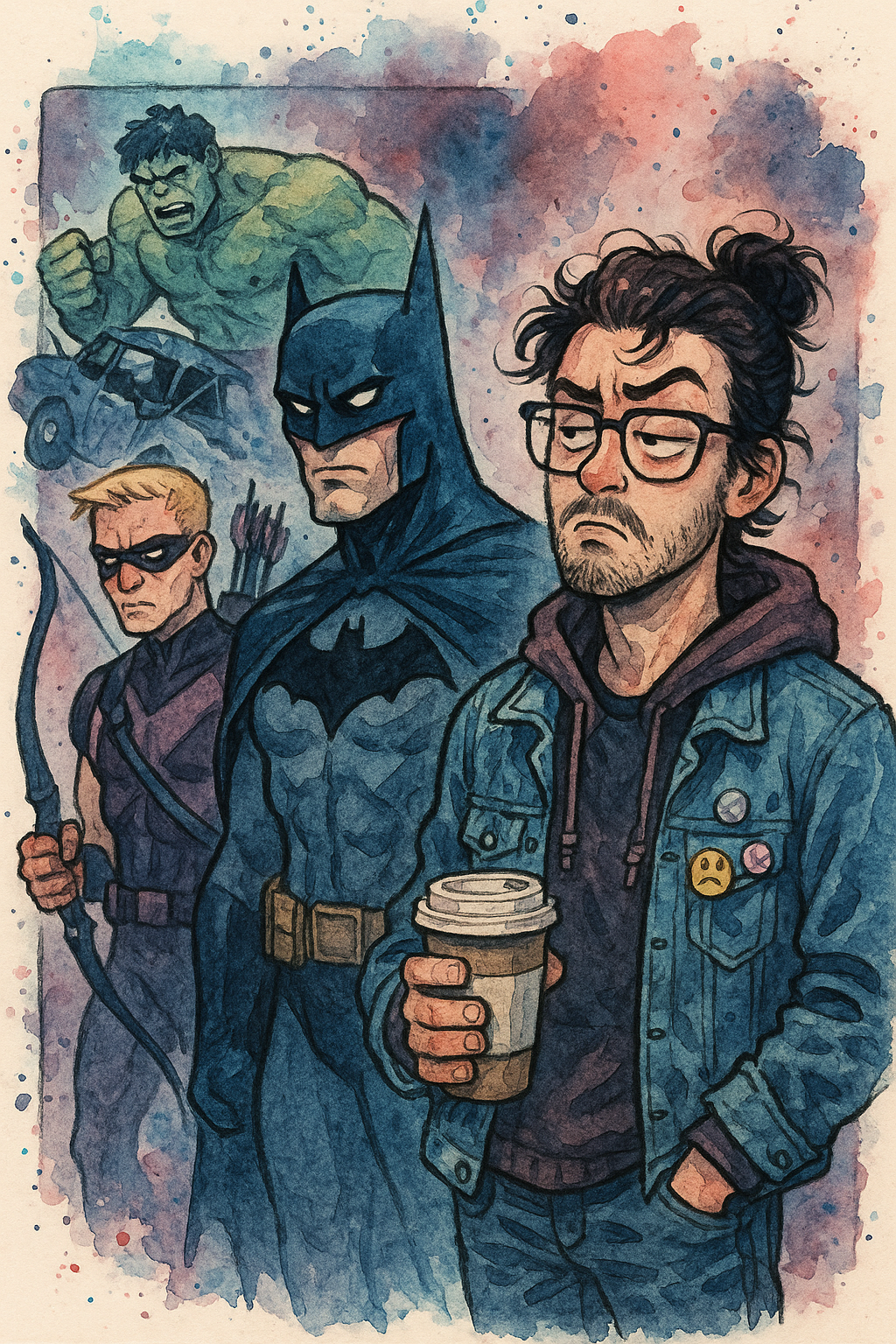
Please note: You are not required to die for the cause. This isn’t a Marvel movie, and martyrdom is not a coping mechanism. Even Jesus napped on boats. If the Savior of the World can snooze through a storm, you can log off Twitter and eat a quesadilla.
Why It’s Cult-Worthy
At the Cult of Brighter Days, we believe joy is rebellion and kindness is our first weapon. Every form of holy mischief is just kindness dressed in different outfits: service, chaos, solidarity, justice, surprise, connection, joy, persistence.
So yes, binge your shows and nap aggressively. But when that fire in your chest whispers, “Do something,” believe it.
Plant the flowers. Deliver the soup. Write the ridiculous email.
That’s not just coping. That’s sacred chaos. That’s the first tenet.
And in case no one told you lately: you’re doing enough. You’re holy mischief in a mortal body.
And somewhere out there, Souperman nods in approval.
References (for the nerds in the back)
Harris, A. H. S., & Thoresen, C. E. (2005). Volunteering is Associated with Delayed Mortality in Older People: Analysis of the Longitudinal Study of Aging. Journal of Health Psychology, 10(6), 739–752.
Okun, M. A., Yeung, E. W., & Brown, S. (2013). Volunteering by Older Adults and Risk of Mortality: A Meta-Analysis. Psychology and Aging, 28(2), 564–577.
Post, S. G. (2005). Altruism, Happiness, and Health: It’s Good to Be Good. International Journal of Behavioral Medicine, 12(2), 66–77.
Poulin, M. J., Brown, S. L., Dillard, A. J., & Smith, D. M. (2013). Giving to Others and the Association Between Stress and Mortality. American Journal of Public Health, 103(9), 1649–1655.
Seligman, M. E. P. (1975). Helplessness: On Depression, Development, and Death. W. H. Freeman.