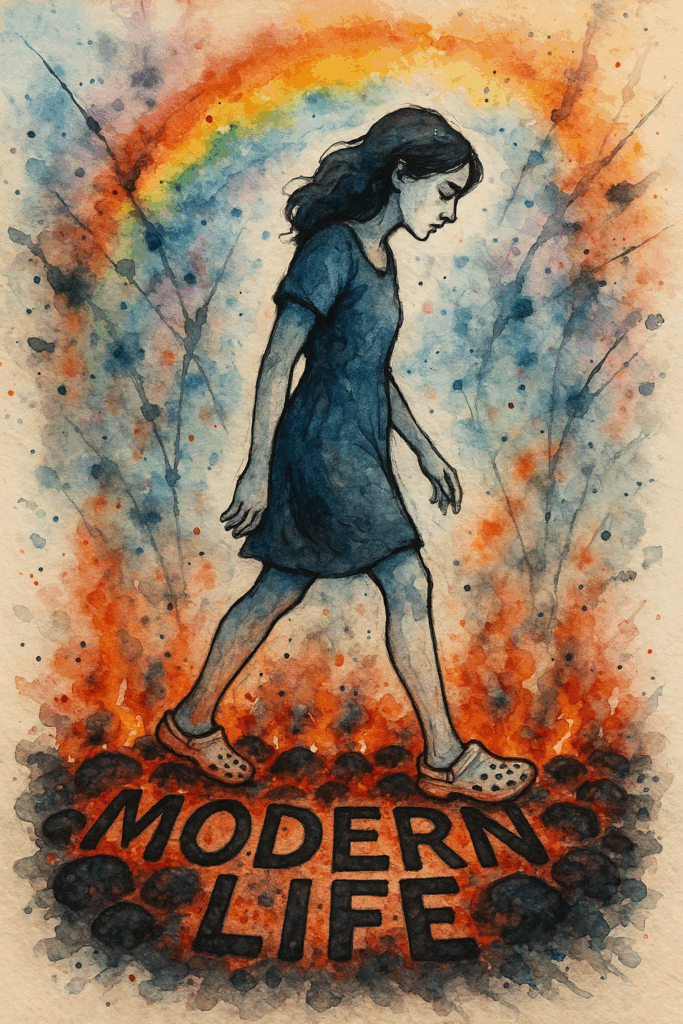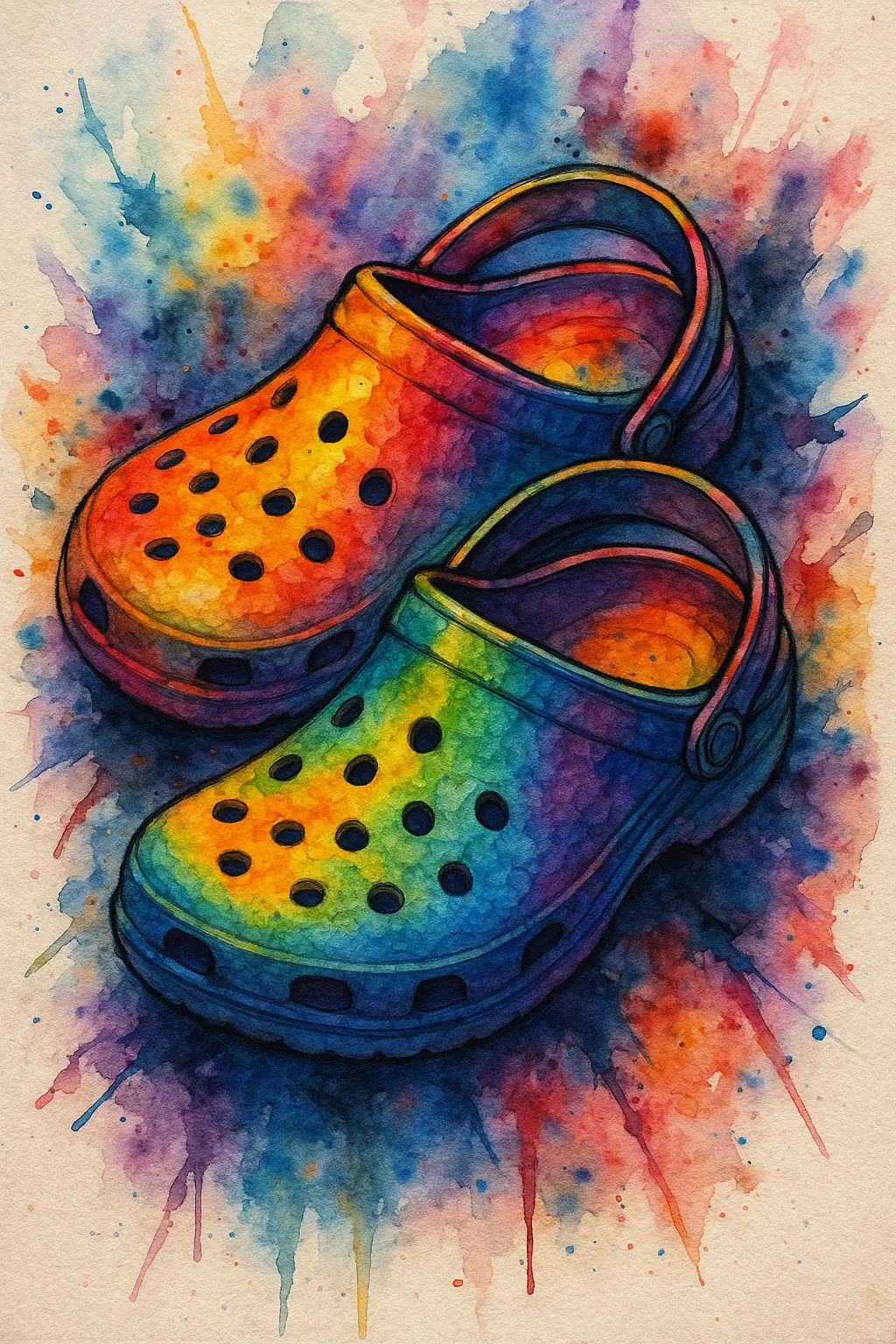
Let us take a moment to talk about the new saints of the modern age: ugly but comfortable shoes.
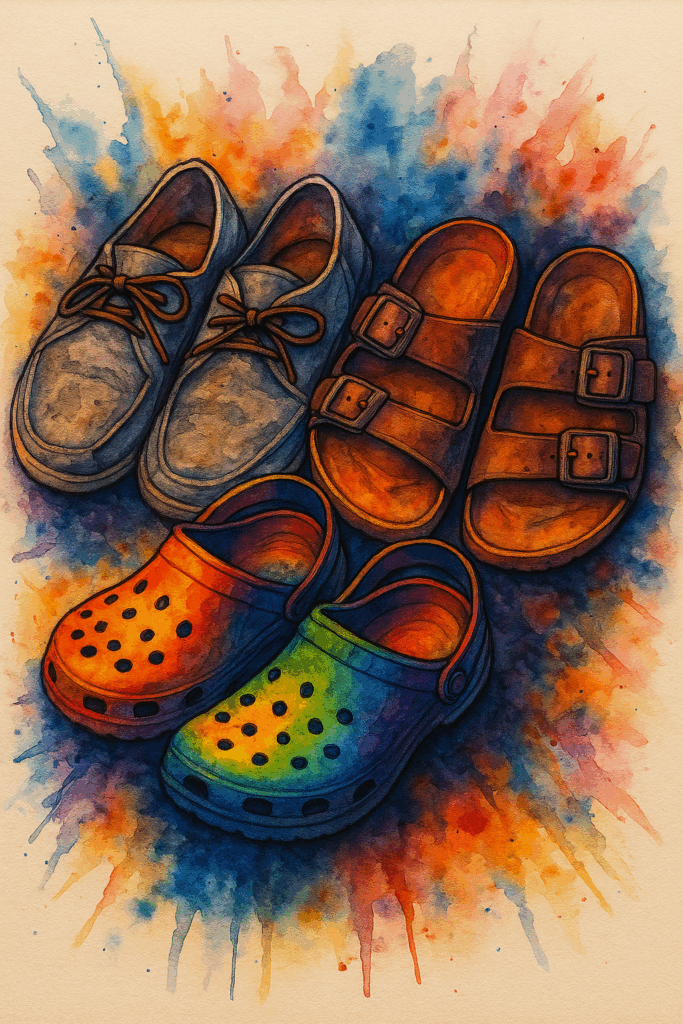
Hey Dudes. Crocs. Birkenstocks. The ghost of Uggs past. Once, these were the shoes we mocked. Now, they have become our chosen vestments of mercy.
We used to say, “beauty is pain.” But somewhere between the pandemic, the climate crisis, and that one Tuesday we all collectively lost it, we realized — maybe beauty can wait. Comfort, however, cannot.
The rise of ugly shoes is not a fashion failure. It’s a spiritual awakening. We’ve transcended vanity. We’ve entered a new liturgical season: Orthopedic Ordinary Time.
The Theology of Arch Support
These shoes are the gospel of coping. They say, “I no longer dress to impress. I dress to survive the grocery store, the existential dread, and the 47 steps between my car and the couch.”
In the Cult of Brighter Days, we honor this as a sacred act of self-compassion. It’s the moment you realize that maybe holiness isn’t found in suffering — it’s found in squishy foam insoles and forgiveness for your own feet.
And yes, science agrees. A 2021 systematic review on footwear comfort (Hagen et al., Journal of Foot and Ankle Research) found that people don’t just imagine comfort — it’s both physical and psychological. Shoe shape, softness, flexibility, even the feeling of stability all affect perceived well-being. In other words, choosing comfy shoes isn’t giving up. It’s embodied self-care — a biomechanical benediction.
To slip on a pair of Hey Dudes is to proclaim, “My ankles are tired of capitalism.” It’s an act of protest. A small rebellion wrapped in canvas.
Even Vogue eventually gave in. When The Cut ran an article defending Crocs, and Post Malone dropped a limited-edition pair that sold out in hours, we knew the age of aesthetic penitence was over. The Kardashians were wearing foam Yeezy slides on purpose. The Reformation has come for our soles.
The Sociology of Sole Salvation
Fashion historians (and several TikTokers with suspicious confidence) might tell you this is a trend born of the pandemic — when “business casual” became “clean from the waist up.” But I say it’s deeper. This is the footwear of a people who have seen too much, scrolled too far, and simply do not have the emotional bandwidth to tie real laces.
We no longer crave the click of heels; we crave the gentle squish of resilience.
When Gen Z declared Crocs “ironically cool,” Millennials finally exhaled, and Boomers just said, “We’ve been telling you that since 2002.” For one brief, blister-free moment, all generations met on the neutral, rubber-scented ground of shared podiatric relief.
And honestly? We earned it. Our ancestors walked barefoot through deserts. We walk through Target in memory foam. Evolution is real, friends.
The Cult Connection
Our tenet of humor — “If you can’t be kind, or nice, be funny, but without punching down” — fits neatly here. Because every time someone scoffs at your ugly shoes, you have a choice:
- You could defend your fashion sense.
- Or you could smile serenely and whisper, “Blessed are the blister-free, for they shall inherit the earth.”
That’s the Cult of Brighter Days way. We honor comfort without shame. We laugh without cruelty. And we understand that sometimes, the holiest thing you can do is wear shoes that look like loaves of bread if it means your knees don’t hurt.
Benediction
So go forth, beloved, in your Crocs, your Dudes, your Birkis, your whatever-the-heck Skechers are doing now.
Stride boldly into this aching world with comfort underfoot and kindness in your step.
For the world may judge your shoes,
but your arches shall know peace.