Welcome to America in 2025, where the economy is one missed paycheck away from cannibalism, basic rights are evaporating faster than ice caps, and the news cycle is a relentless doom scroll of “What fresh hell is this?”
When the people in power are treating democracy like a piñata stuffed with civil liberties, it’s easy to feel like a bug under a billionaire’s boot. But here’s the thing: when the world is a flaming dumpster of existential dread, boundaries aren’t just self-care—they’re survival.
And in times like these, the distinction between rules and boundaries is the difference between handing out fire extinguishers and trying to order the fire to stop burning.
Rules: Attempt to control other people’s behavior.
Boundaries: Define how you will respond to other people’s behavior.
Example:
- A rule says, “No one is allowed to talk about politics at dinner.”
- A boundary says, “If politics comes up at dinner, I will excuse myself to protect my sanity.”
The rule assumes you can control the chaos. The boundary admits you can’t—but you can still choose how much of it you let in.
Why Boundaries Are the Only Thing You Can Control When Everything Else Is Spinning Out
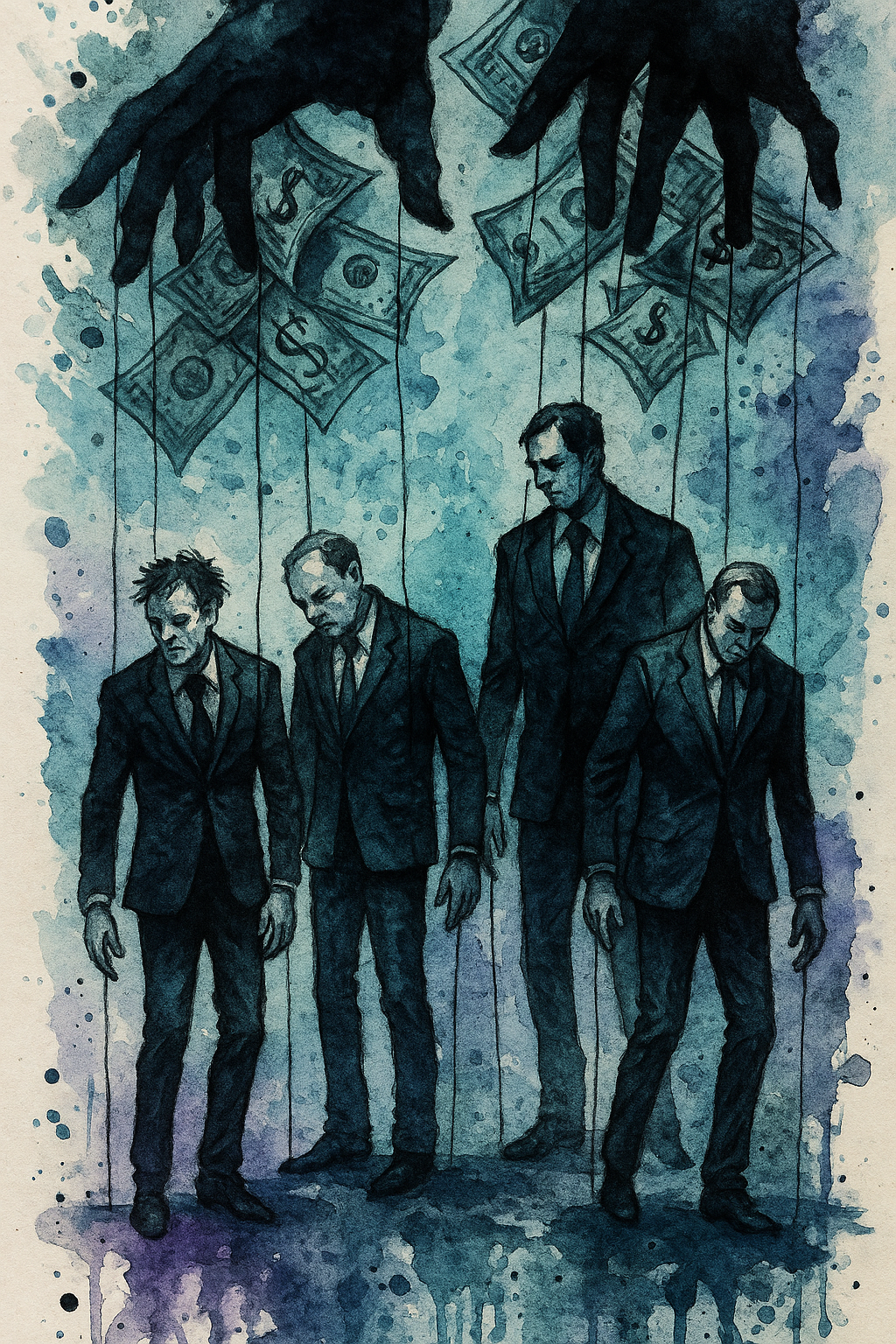
We’re living through a political apocalypse where dissent gets you disappeared and billionaires are using their rocket money to buy bunkers, not bread. In that kind of world, boundaries become less about self-care and more about self-defense. Here’s why:
- Reclaim Personal Agency: When everything feels out of control, boundaries are a way to say, “You don’t get to set me on fire just because everything else is burning.”
- Protect Mental Health: If the news is a conveyor belt of trauma, boundaries are the emergency stop button.
- Create Stability: When the world is chaos, boundaries are the lines you draw in the sand to keep yourself from sinking.
- Build Community: Setting clear boundaries gives others a map to navigate your chaos without stepping on your landmines.
Case Study #1: The Controller Conundrum – When Power Is Out of Your Hands
Let’s say your kid is losing it over video games. The world’s a mess, and this digital escapism is their only lifeline. You could:
- Rule: “No video games until you finish your homework.”
- Boundary: “I will give you the controller after I see your completed homework.”
The rule tries to seize control like a power-mad dictator. The boundary says, “Here’s my line; how you handle it is up to you.”
In a world where control is a fantasy and autonomy is on the endangered species list, that little bit of choice can feel like a revolution.
How to Set Boundaries When Everything Feels Like a Dumpster Fire
- Identify What You Can Control:
- You can’t stop your racist uncle from spewing conspiracy theories on Facebook, but you can mute him faster than a QAnon mod in a fact-checking forum.
- You can’t stop your boss from demanding overtime, but you can enforce a hard stop on your availability.
- Articulate Your Boundary Clearly:
- Instead of, “Everyone needs to stop talking about politics,” try, “I’m not discussing politics today—it’s too much for me right now.”
- Instead of, “I don’t want to hear about your latest conspiracy theory,” try, “If the conversation goes there, I’m going to step away.”
- Enforce the Boundary Without Apology:
- Boundaries are not up for debate. Your peace is not a democracy.
- “I understand this is frustrating for you. I’m still not engaging in that conversation.”
- Follow Through Consistently:
- If your boundary is, “I don’t discuss politics online,” then mute, block, or unfollow anyone who drags you into the political pit of despair.
One More Time for the Folks in the Back: Boundaries vs. Rules – The Quick and Dirty Guide to Not Being a Control Freak
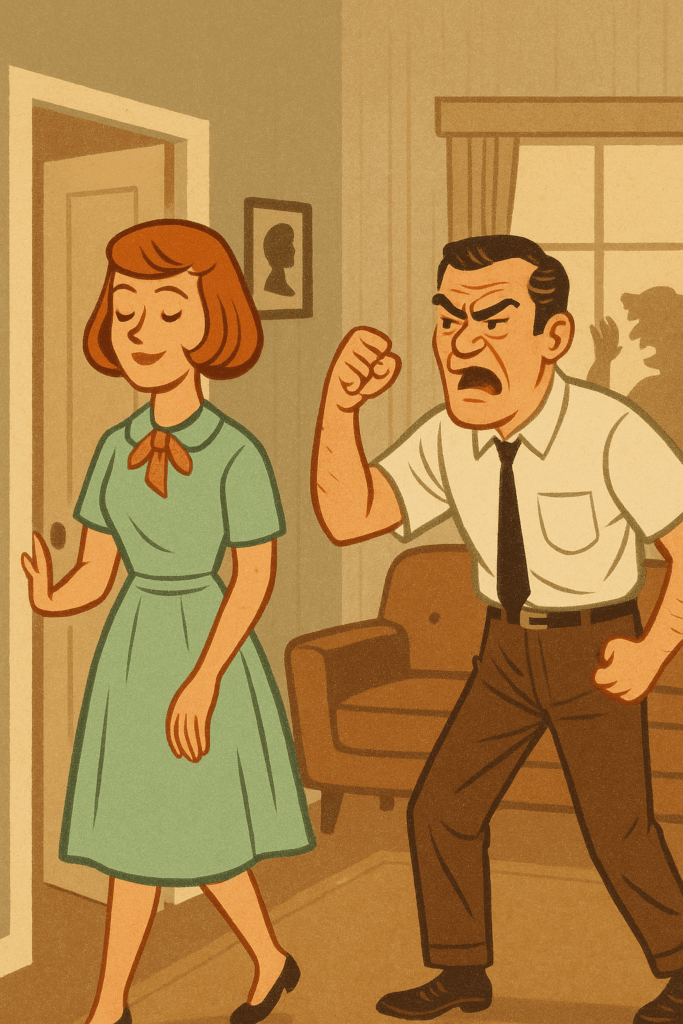
Boundaries and rules get tangled up faster than a toddler in a yarn shop, but they’re not the same thing. Rules try to control other people’s behavior. Boundaries define your own. Let’s rapid-fire through some real-world scenarios to illustrate:
- Rule: “You can’t text me after 9 PM.”
Boundary: “I won’t be responding to texts after 9 PM.” - Rule: “You can’t bring up politics at dinner.”
Boundary: “If the conversation turns to politics, I will leave the room.” - Rule: “You have to respect my mental health.”
Boundary: “If you continue to criticize my boundaries, I will end this conversation.” - Rule: “You have to stop yelling at me.”
Boundary: “If you raise your voice, I will hang up the phone.” - Rule: “You need to stop being so negative.”
Boundary: “I will step away if the conversation is too draining for me.” - Rule: “You can’t sacrifice a goat in my living room.”
Boundary: “If you bring a goat into my house for ritualistic purposes, I will call animal control.”
Rules are power moves. Boundaries are power reclaims. And when the world feels like a burning clown car piloted by narcissists in overpriced suits, reclaiming that power is how you keep from losing your mind.
Case Study #2: Boundaries in the Cult of Brighter Days – Managing Chaos Without Becoming It
The Cult of Brighter Days thrives on chaos like a feral cat on catnip. Council meetings swing from philosophical debate to existential crisis like a metronome on speed. And Alice/Dull Lemon, the walking clipboard of cosmic order, is not having it.
Scenario: During a meeting that devolves into a shouting match over the ethical implications of pineapple on pizza, Alice sighs, lights an imaginary cigarette, and draws a line:
- Boundary: “I’m here for constructive discussion. If it turns into a personal attack or chaos grenade, I’m stepping away to maintain my focus.”
Outcome:
- Alice preserves her sanity without trying to control the chaos tornado swirling around her.
- The group gets a reminder: Your boundaries are about your behavior, not about controlling theirs.
Conclusion: Boundaries as Acts of Resistance
Let’s not sugarcoat it: The world is a smoldering wreck. The economy’s tanking, human rights are being strip-mined for profit, and billionaires are treating our collective collapse like a spectator sport.
But in the middle of the dumpster fire, boundaries are a form of rebellion. They’re a way to say, “I can’t stop the world from burning, but I can at least choose not to fan the flames.”
Because when control is a fantasy and compliance is demanded like a blood tithe, saying “No” is more than self-care—it’s self-defense.