Good news, everyone.
Apparently, the American economy is doing great — because Elon Musk is about to receive a one trillion dollar compensation package.
A trillion. With a “t.”
The sort of number you usually only see in science fiction, galactic empires, or budget estimates for the Death Star’s emotionally unavailable cousin.
And, as always, our tax system will graciously ensure that most of this income is taxed at a rate so gentle it should probably come with a weighted blanket and a soothing podcast.
Now here’s where it gets… uplifting, in that uniquely American way:
Experts tell us that $54 billion — just 5% of Elon’s little windfall — would be enough to end homelessness in the United States.
Not “reduce it.”
Not “address it.”
End it.
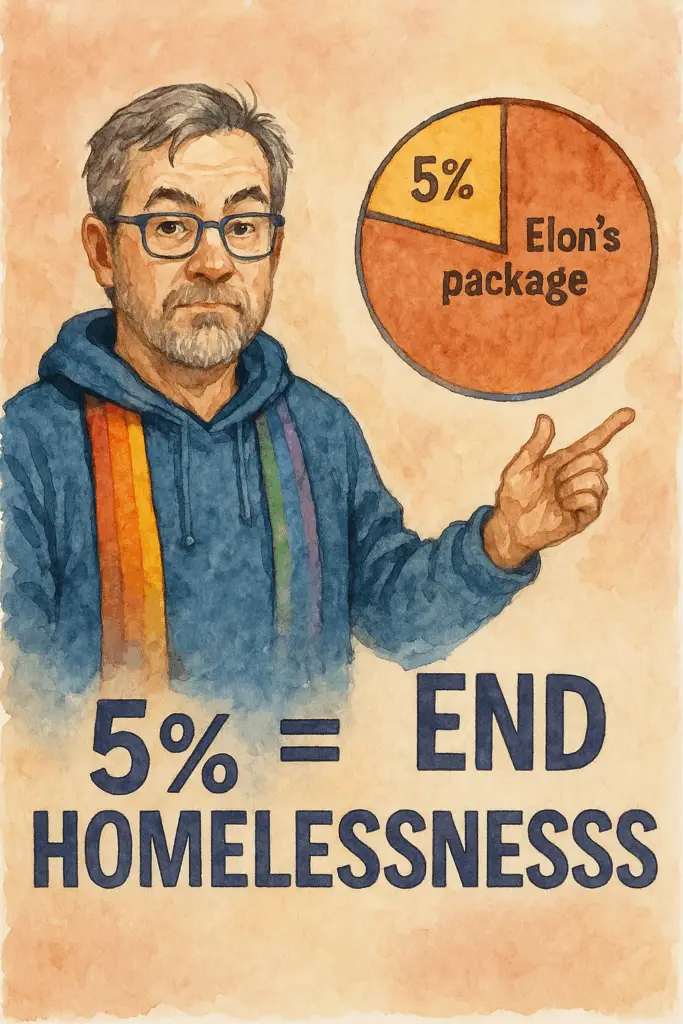
And if we nudged his tax rate on this package upward by that same five percent, we’d have the money in hand.
No revolutions required.
No manifestos.
No guillotines.
Just a microscopic adjustment to one man’s extraordinarily good day.
But of course, we won’t do that.
That would make too much sense, and American policymaking has a deep spiritual commitment to avoiding solutions that are obvious, affordable, or humane.
Instead, we’ll congratulate him, admire the stock charts, and continue debating whether people experiencing homelessness should be helped at all, because someone on television used the phrase “moral hazard” with a straight face and a decent suit.
And here comes the good news — sincerely, this part is good:
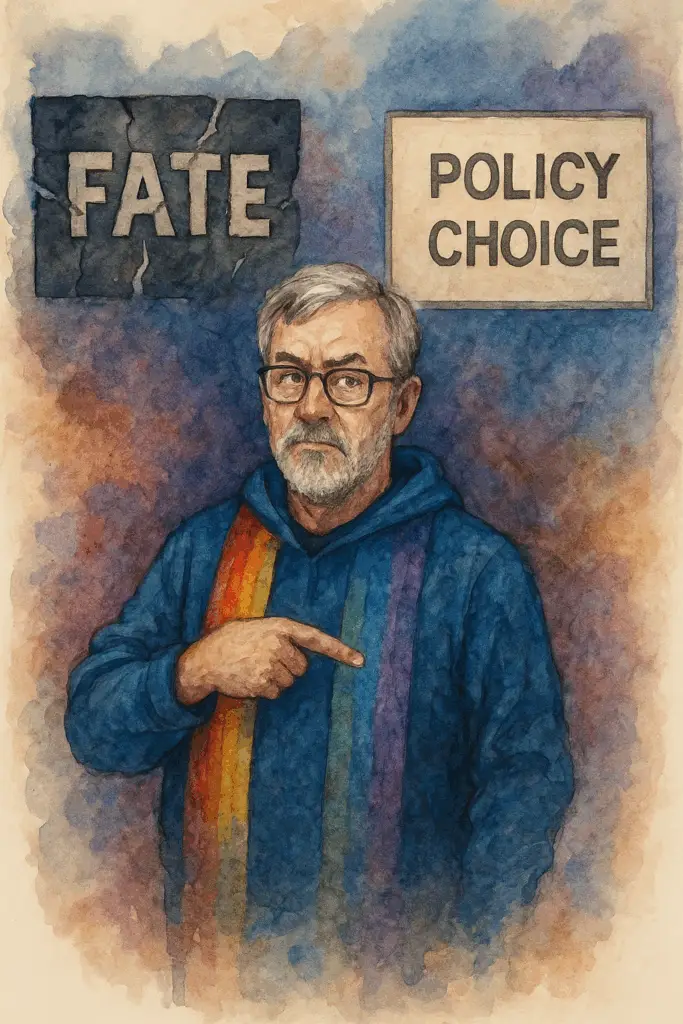
The fact that we could end homelessness so easily proves that homelessness isn’t some inscrutable mystery of the universe.
It isn’t a natural disaster.
It isn’t an inevitability.
It’s a choice we keep making.
A policy decision wrapped in a shrug.
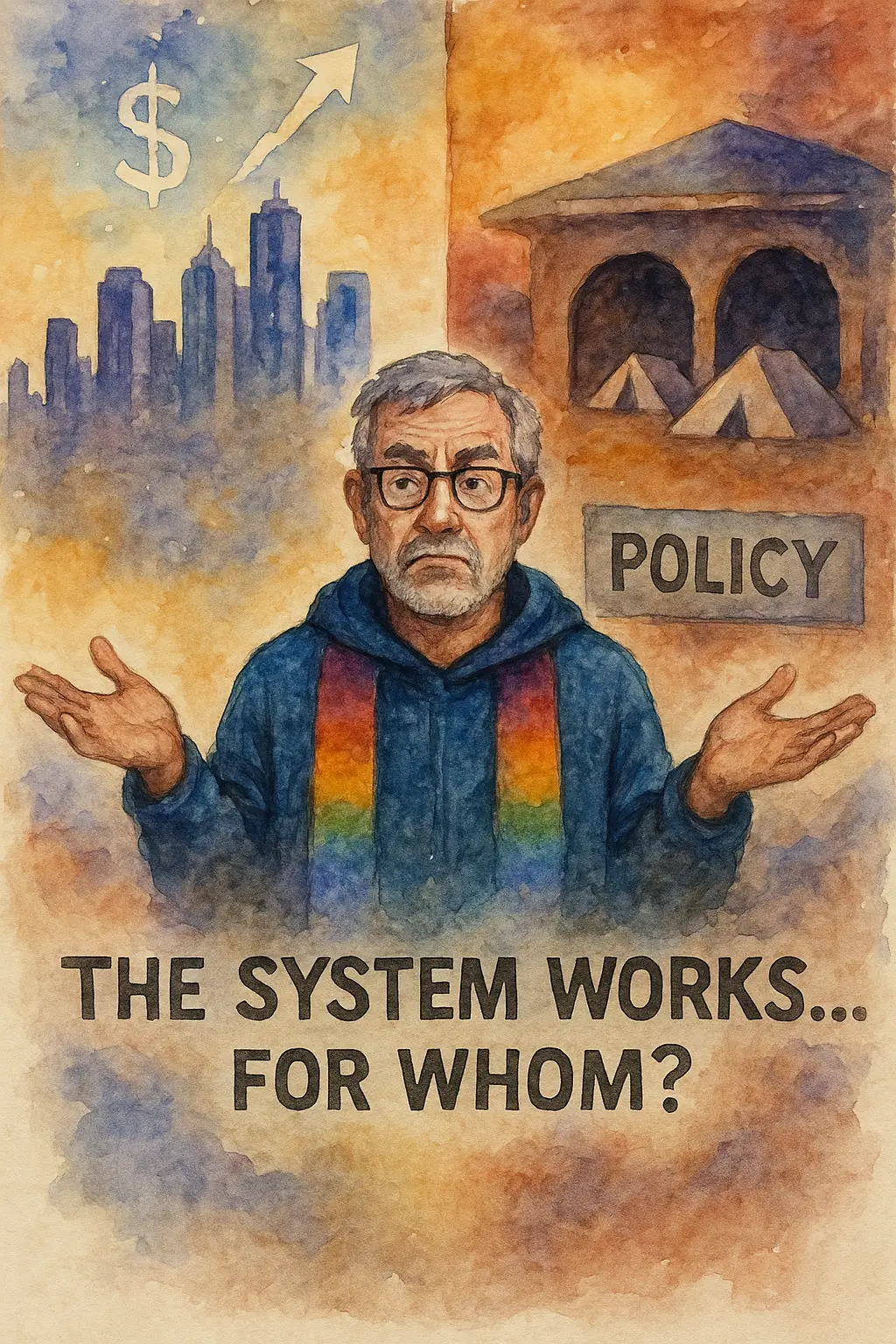
So yes, the system works.
Just… not for the people sleeping under overpasses.
But it works beautifully for the people collecting trillion-dollar compensation packages and commemorative rocket-shaped paperweights.
All of which is to say:
Take heart.
The mountain isn’t impossible to climb — it’s simply guarded by people who are very fond of the view from the top, and extremely allergic to sharing binoculars.
And that, in its own tragic little way, is the good news.