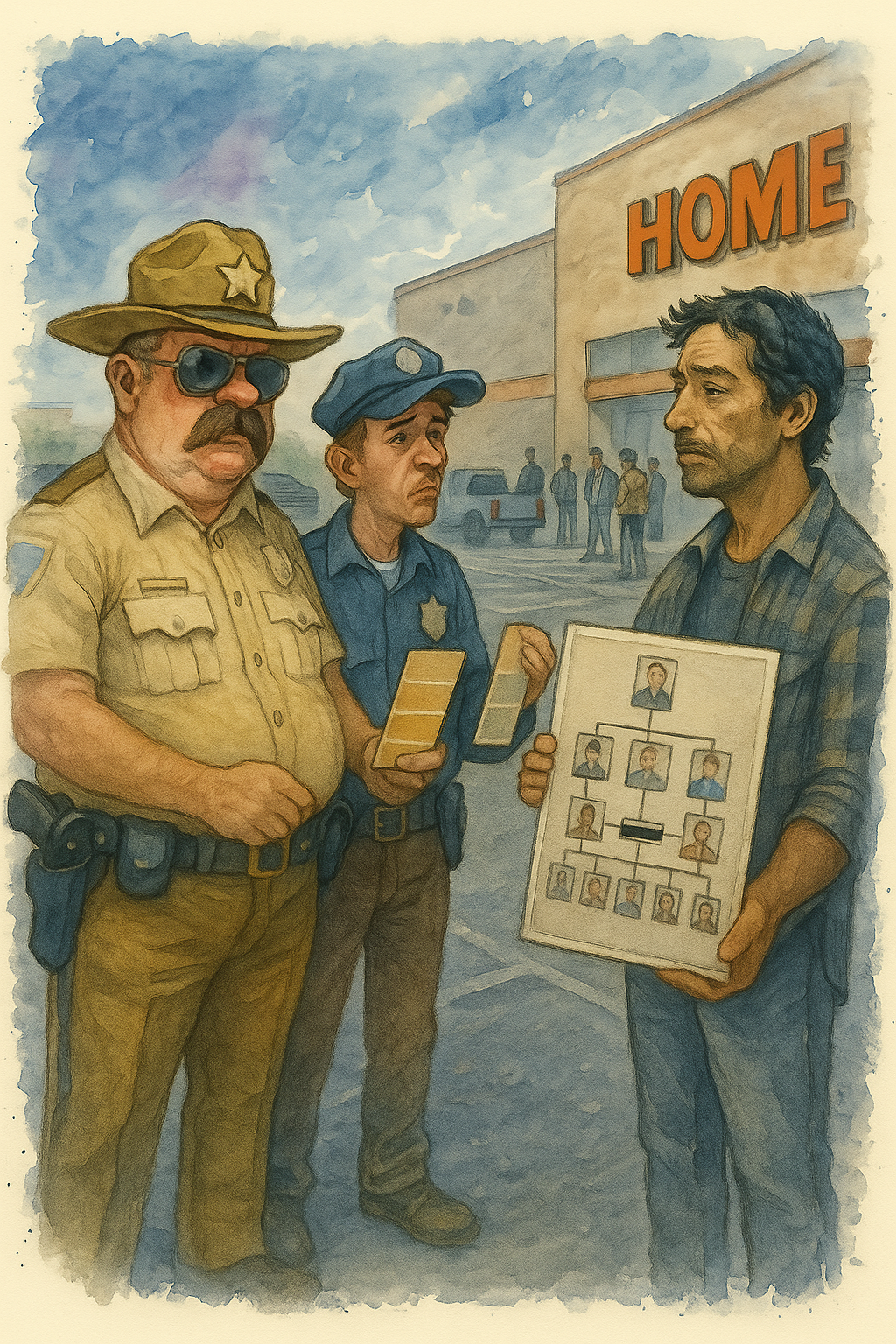
In Los Angeles, recent immigration enforcement actions have taken a troubling turn. Federal agents began detaining people based on how they look, speak, or where they were standing—no warrant, no specific behavior, just a hunch. Local courts tried to stop it, arguing that you can’t detain someone simply for being brown, speaking Spanish, or waiting for work outside a Home Depot. But the U.S. Supreme Court quietly stepped in and said, actually, yes, you can.
They didn’t call it that, of course. The ruling leaned on precedent—cases like INS v. Delgado and others that allow for workplace questioning or “roving patrols” under certain conditions. But the practical effect is the same: identity markers—like language, accent, or skin color—are now fair game in building “reasonable suspicion” for immigration enforcement.
Which brings us to the real question:
How brown, how accented, how out-of-place do you have to be before you become suspect?
Because the ruling doesn’t just affect undocumented people. It affects people who are here legally. People who were born here. Citizens. Veterans. Neighbors. Friends. People who look a certain way, speak with the wrong inflection, or stand in the wrong parking lot. And once appearance becomes probable cause, it doesn’t stop at borders or city lines.
What This Means — For Red States, Too
It’s easy to think this is a California problem. Or a Blue state problem. Or a problem for “other people.” But red states—Wyoming included—are not immune. In fact, we may be more vulnerable.
Here’s why:
Many of our rural communities, especially in agriculture, construction, energy, and service work, depend on Latino labor—some undocumented, yes, but many legal permanent residents or naturalized citizens. When the law says it’s acceptable to stop and question someone based on their appearance or location, those people are suddenly under a different set of rules.
Even if they’re legal. Even if they’ve lived here for decades. Even if they’re more American than apple pie and rodeo combined.
And once trust breaks down—between residents and police, workers and employers, neighbors and neighbors—community collapses. We lose what actually holds us together: shared effort, quiet cooperation, the borrowed tools and casseroles and mutual aid that keep rural life functioning.
Wyoming knows a little something about that. So does Nebraska. And Arkansas. And Mississippi. Red states, for all their talk of independence, survive on interdependence—whether we want to admit it or not. When you turn members of a community into suspects, you don’t just scare immigrants.
You scare families.
You scare kids on playgrounds and teachers in classrooms and customers at gas stations.
You fracture the trust it takes to build anything lasting.
“Legal Enough” Is a Moving Target
You might think: well, I’m legal. I’ve got papers. My family’s been here for generations. They’re not after me.
But here’s the thing: authoritarian policies don’t draw neat lines. They draw vague ones. And they move them.
I’m a Mayflower descendant, for what it’s worth. That’s about as “founding stock” as it gets. But in the summer, I tan. I speak Spanish—not all the time, but well enough. If I ever find myself standing in a Home Depot parking lot looking for day work to pay the bills (and honestly, I’m not far from that now), what’s protecting me? A genealogical chart? A line on my birth certificate?
Once the threshold for suspicion becomes “looks Latino” or “speaks Spanish,” there’s no safety in being “legal enough.” Because the people enforcing those rules don’t check your birth certificate. They don’t look up your family tree. They act on perception—and perception is messy.
And if you think it stops with immigration, you haven’t been paying attention.
Today it’s a traffic stop. Tomorrow it’s a school board meeting. Next week it’s a protest, a misheard sentence, or standing on the wrong street corner with the wrong skin tone.
Authoritarian drift doesn’t ask if you’re legal. It asks if you’re convenient to remove.
Wyoming Knows Better
Out here, we like to believe we’d stand up to government overreach. That we’d fight back if something wasn’t right. That we believe in freedom.
But here’s what real freedom looks like: a man can go to work without being detained for how he talks. A woman can pick up her kids without being asked for ID. A family can wait for a ride outside a hardware store without a badge in their face.
And if we let that slip? If we let the government start deciding who looks American enough to stay?
Then it won’t be long before even the “legal ones” start wondering when their papers won’t be enough either.