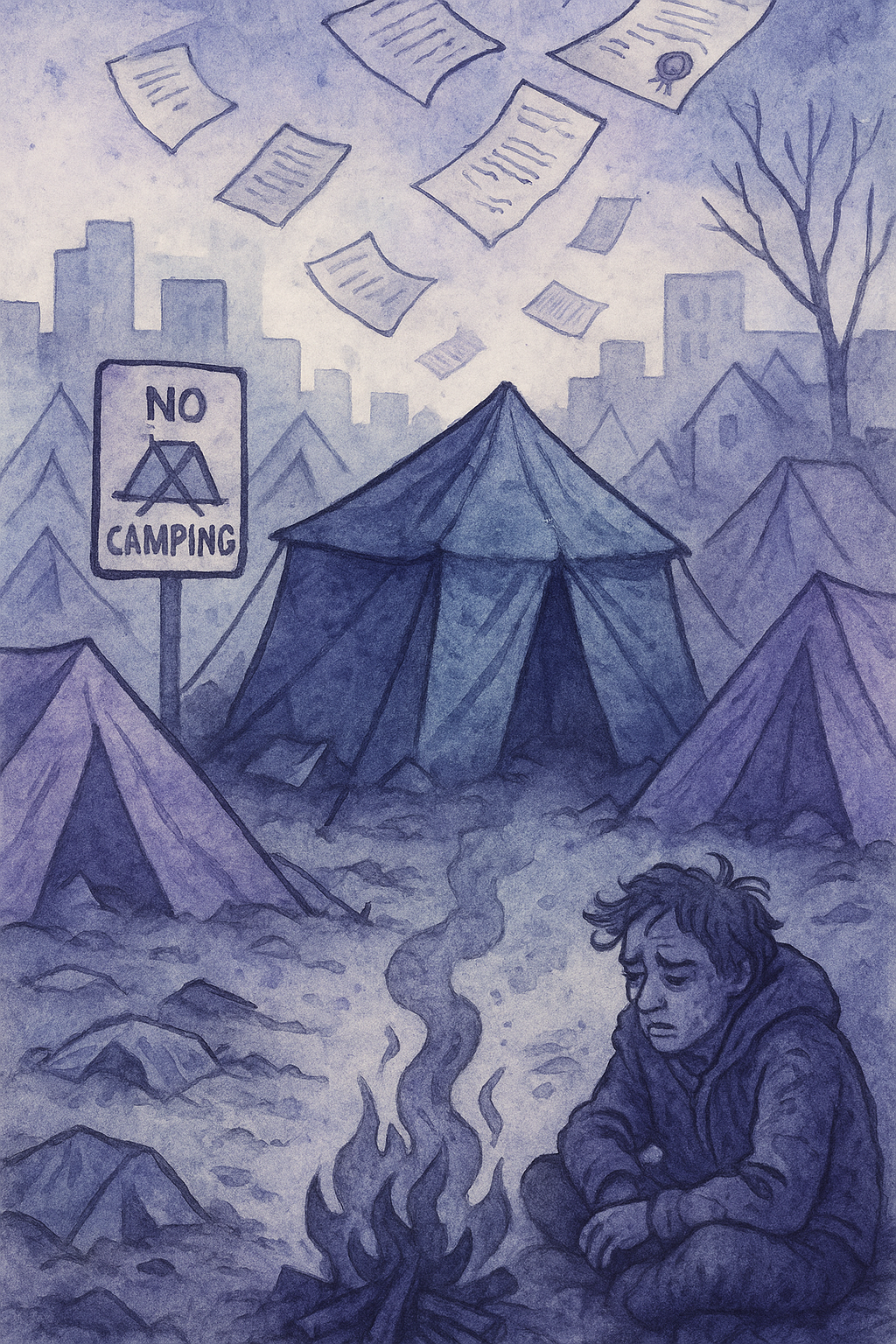
The Art of Not Setting Yourself on Fire to Stay Warm
Some weeks feel like the universe is running a social experiment titled “How Much Can One Nervous System Take Before It Starts Smoking?”
You’ve been holding the line, pretending your teeth grinding counts as meditation, telling yourself that scrolling doom-news is “staying informed.” Somewhere between the tenth cup of coffee and the hundredth bad headline, you start fantasizing about just… walking away. From the job, the group chat, the entire species.
And that, right there, is where the confusion begins — because sometimes running away looks an awful lot like letting go.
But they aren’t twins. They’re distant cousins who borrow each other’s clothes and ruin your plans in opposite directions.
Part One: The Psychology — Why Running Away Feels Like Freedom (Until It Doesn’t)
Running away is the nervous system’s version of hitting “Ctrl+Alt+Delete” on reality.
It’s the adrenaline rush that whispers: If I just quit, ghost, disappear, I’ll finally feel peace.
And to be fair, sometimes you do — for about six minutes. Then your brain starts packing the same chaos into a new suitcase.
Avoidance masquerades as relief because it stops the noise. But it doesn’t solve it. It’s that fleeting silence after you slam a door — a calm born of absence, not healing. The stressor’s gone, but your body still hums like a live wire, because the exit wasn’t integration; it was evacuation.
Letting go, by contrast, doesn’t always feel peaceful at first. It often feels like grief — like choosing not to chase closure that will never come. Letting go is a deliberate act of surrender. It’s saying, I can’t carry this anymore, and I don’t need to prove that I can.
Where running away numbs, letting go metabolizes. One is a sprint from pain; the other is a quiet acknowledgment that you can’t outrun what’s already inside you.
Psychologically, the difference hinges on agency. Running away is impulsive control — the illusion of escape. Letting go is conscious acceptance — the reclamation of it.

Part Two: The Coping Kit — How to Tell Which One You’re Doing
Here’s how to check yourself before you torch another bridge or ghost another therapist.
- Ask what emotion you’re trying to avoid.
Running away usually hides fear, shame, or exhaustion. Letting go faces them with a deep sigh and a well-timed snack. If the decision feels frantic, it’s probably flight. If it feels sad but solid, it’s probably release. - Notice your nervous system.
If you’re vibrating like a trapped moth, you’re running. If you’re breathing — maybe shakily, but breathing — you’re letting go.
Your body tells the truth long before your rationalizations do. - Check the story you’re telling yourself.
Running away says, They’ll regret losing me.
Letting go says, I deserve peace whether they notice or not.
One clings to external validation; the other builds internal safety. - Look at what you pack for the journey.
When we run, we take resentment, guilt, and unfinished arguments.
When we let go, we take lessons, compassion, and our phone charger. - Ask what you hope to find on the other side.
Running away looks for oblivion.
Letting go looks for space — the kind where new things can grow.
Part Three: When the Week Has Been Too Damn Much
If you’re tired enough to fantasize about deleting your entire calendar, don’t pathologize it. Sometimes the urge to run is your psyche waving a white flag, not declaring moral failure. It’s information: something is burning too hot.
The goal isn’t to suppress that instinct — it’s to translate it. You don’t have to blow up your life to rest. Sometimes the bravest act is the tiny pause between “I can’t do this anymore” and “What if I tried something gentler?”
Here’s the reframe I give my clients (and myself):
You’re not weak for wanting to run. You’re human. But your power lies in choosing where you rest.
Running away builds walls; letting go opens windows.
So take the nap. Mute the news. Step away from the chaos for an afternoon.
Just remember: there’s a difference between retreat and disappearance. One nourishes; the other erases.
The Gentle Dare
Maybe this week you don’t need to reinvent your coping mechanisms. Maybe you just need to stop fighting gravity.
Let something fall — the expectation, the grudge, the need to fix it all before dinner.
Let it hit the floor without apologizing.
That isn’t running.
That’s release.
And if you can find even five minutes of stillness in the wreckage — congratulations, love.
That’s you, finally, not setting yourself on fire just to stay warm.