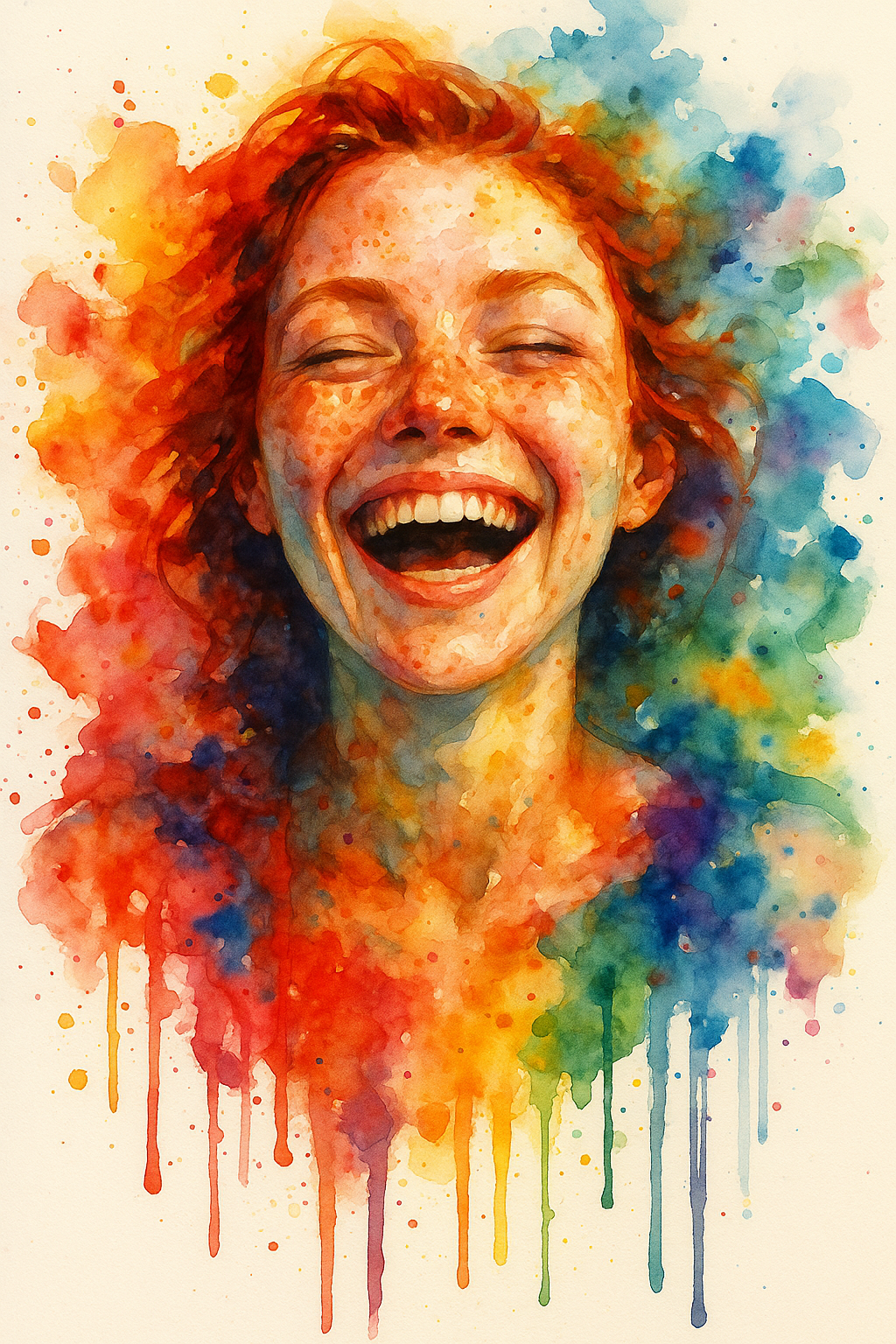
Finding Joy in the Absurd
Editor’s Note from the Glitter-Stained Desk of Bishop Sara:
I wrote this before the Jimmy Kimmel fiasco detonated across the internet like a clown car on fire. You know, the one where he got yanked off air for daring to say out loud what most of us have been whisper-yelling into our cereal for years. That one.
At the time, I was just trying to write something honest about how sacred humor keeps us breathing when everything else feels like a gas leak under late-stage capitalism. But now? After watching an entire news cycle implode because one man used satire to poke at the power machine?
Now this piece feels less like a playful theological detour and more like a high-urgency communion wafer made of rage and giggles.
Because sacred laughter isn’t just cute. It’s dangerous. It’s resistance. It’s what they go after first when systems get scared. So if you’re feeling overwhelmed, gutted, or ghosted by the cultural collapse parade—weirdly, wonderfully, this is exactly the right place to be.
Take a breath. Pass the memes like sacrament. And let’s laugh like prophets on fire.
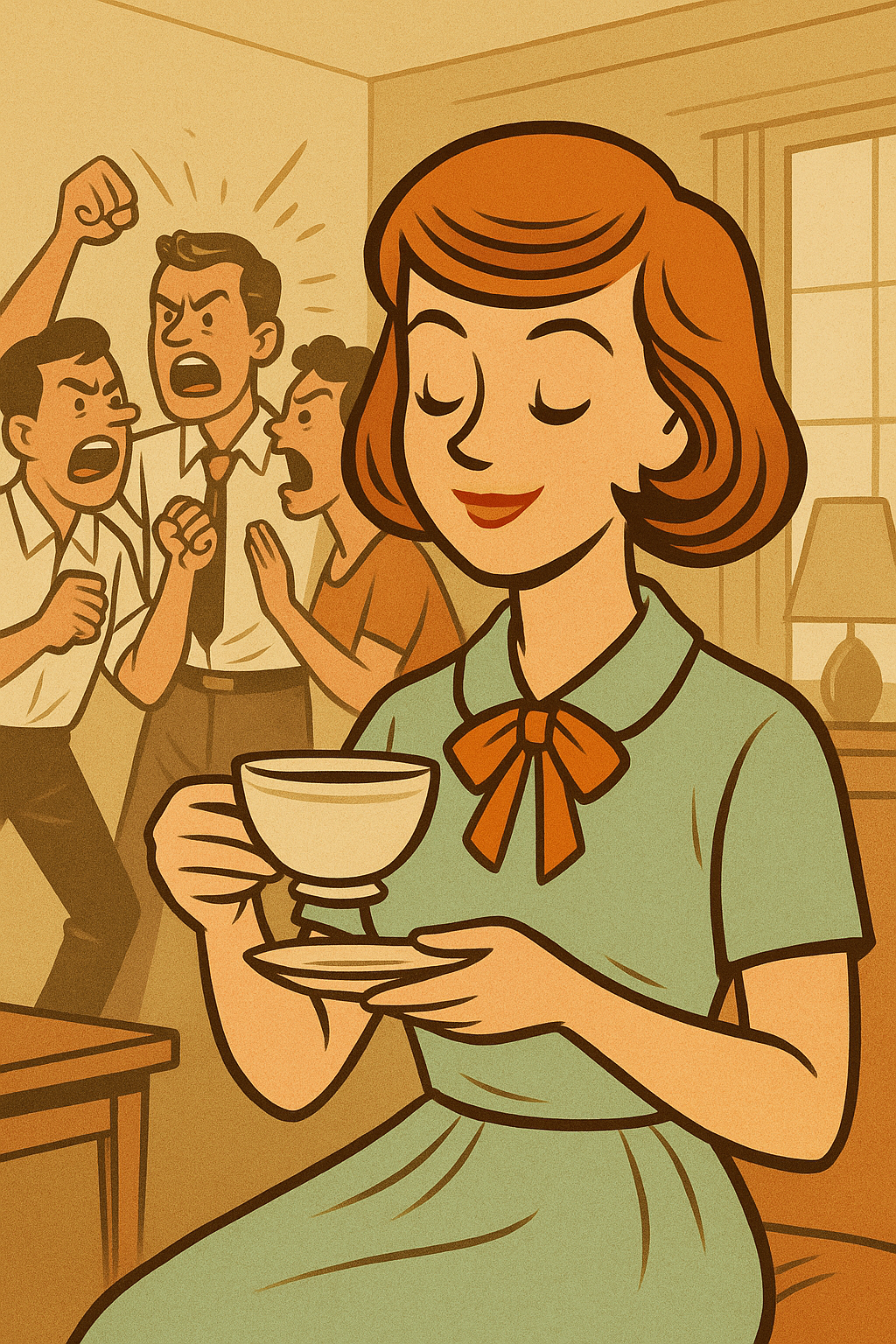
The world is absurd. Full stop. We’re living in an age where billionaires are racing to colonize Mars while most of us can’t afford rent, politicians are arguing about whether books are too dangerous, and my neighbor just spent twenty minutes yelling at a raccoon about garbage rights. (For the record, the raccoon won—and now has a small but passionate voter base.)
When reality itself reads like bad improv, sometimes the only faithful response is to laugh. Not because everything is fine, but because laughter is how we survive. In the Cult of Brighter Days, we believe humor isn’t just a coping mechanism—it’s sacred.
Laughter as Free Healthcare
Here’s the science-y bit: humor lowers stress hormones, boosts endorphins, and strengthens social bonds. It’s free therapy, minus the copay and the “have you tried mindfulness?” pamphlet. Laughing until your stomach hurts with someone you love does more for your soul than any self-help book stacked at Target.
The Many Flavors of Sacred Laughter
- Dark Humor: Joking about what terrifies us doesn’t erase the fear, it gives us the mic. Think of it as exorcism via sarcasm. “Yes, civilization is collapsing, but at least I don’t have to pay off my student loans in the afterlife.”
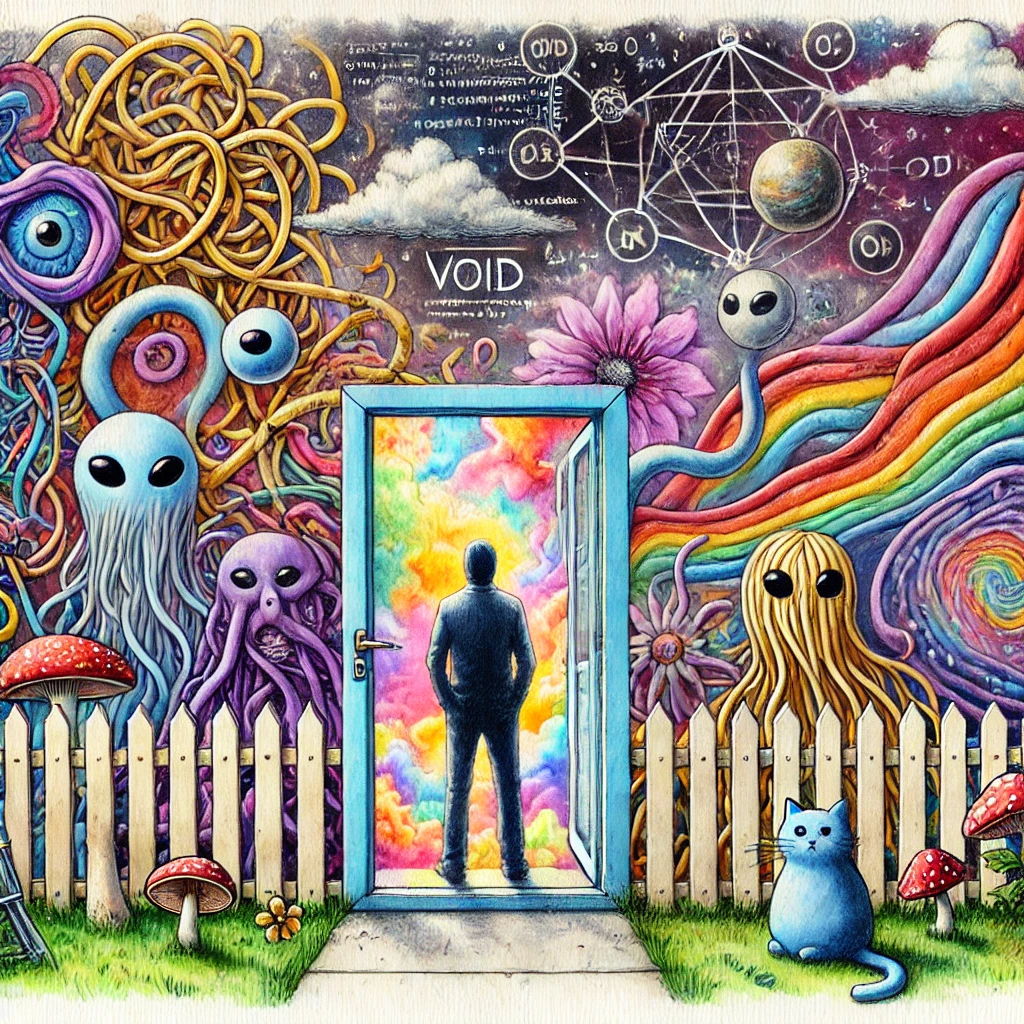
- Absurdist Humor: If the universe insists on being nonsense, we might as well join in. “Yes, society is crumbling, but also my cat just tried to fight the vacuum cleaner and lost.”
- Meme Communion: Behold the sacred scrolls of our age, passed down not on parchment but in group chats. Some people light candles at altars; we send each other cursed SpongeBob memes at 2 a.m. Same difference.
Ritualizing the Ridiculous
Sacred laughter isn’t just random—it can be ritualized.
- A daily meme exchange in your group chat = modern confession.
- “Clowning hour” with friends = as holy as Sunday brunch.
- Writing absurd prayers counts as liturgy:
- “Dear Lord, please let the WiFi hold until this Zoom ends.”
- “Oh Divine One, grant me the patience to survive another ‘reply all.’”
- “Blessed are You, Eternal One, for inventing nachos.”
We can even rewrite our sacred texts in comic relief:
- Knock-knock jokes as scripture:
“Knock knock.
Who’s there?
Grace.
Grace who?
Gracefully reminding you that the universe is ridiculous, and you should hydrate.”
- Stand-up comedians as prophets: the ones who point out the ridiculous and dare us to laugh anyway.
Sacred Laughter and the 3rd Tenant
This is where our third tenant comes in: If you can’t be kind, or nice, be funny—but without punching down.
Sacred laughter is not cruel. It doesn’t mock the vulnerable, the struggling, or the already-broken. That’s not coping, that’s cruelty. What it does is flip the script:
- We laugh at power, not the powerless.
- We laugh at the ridiculous systems that try to crush us, not the people already crushed by them.
- We laugh at raccoons arguing over garbage, not at our neighbors who have less than we do.
Laughter should lift us up, not push someone else down. It’s about punching holes in despair, not punching people. In this way, sacred laughter becomes a double-edged blessing: it heals us and refuses to harm others.
The Last Punchline
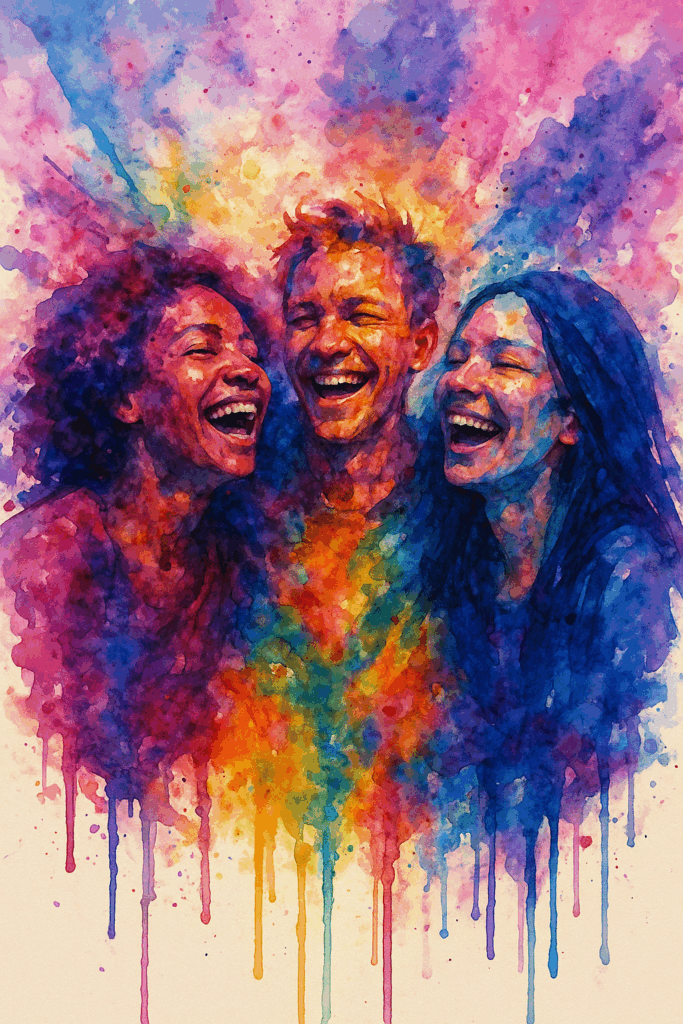
Sacred laughter isn’t about denial. It’s rebellion. It’s refusing to let despair monopolize the narrative. We laugh not because things aren’t bad, but because despair doesn’t get the last punchline.
In the Cult of Brighter Days, we believe laughter is resistance. Humor is survival. And when the apocalypse finally comes, you’ll find us in the corner—passing memes like communion wafers, writing absurd psalms about raccoons, and laughing ourselves into the next world. Because if the end is coming, we’re going out giggling.