The Temple of Doom
A few months back, we talked about the bureaucratic circus that is federal homelessness policy. Well, buckle up, because the sequel just dropped—and it’s not “The Empire Strikes Back,” it’s “Temple of Doom.” And just like that movie, the plot makes less sense the longer you sit with it.
Here’s how it used to work: communities that handle homeless services—the Continuums of Care, or CoCs—got federal money based on two things. One, how big their community was. Two, how well they actually did the damn job. Every year, they had to show receipts:
- How many people they housed.
- How many folks were served.
- Whether the numbers went up or down from the year before.
- And crucially, how many people fell back into homelessness after being housed.
In other words, funding was tied to reality: how well you were helping people stay off the streets.
But this year? HUD flipped the script. Now, there’s a big shiny pot of money, and it’s not about results—it’s first-come, first-served. Like Black Friday, except instead of trampling each other for a flatscreen, communities are elbowing each other for scraps to keep people alive. And the catch? The fine print reads like it was ghostwritten by Darth Vader’s HOA committee:
- You must ban public camping. Translation: criminalize sleeping outside when there’s nowhere else to go. Because jail cells are apparently the new affordable housing.
- You must force people into mandatory services. Rehab for everyone—whether or not addiction is their issue. Imagine if the DMV made everyone take anger management before handing over license plates.
- You must cooperate with federal law enforcement. Yes, ICE. Nothing says “safe haven” like the same folks who raid job sites and deport parents. That’ll really encourage people to walk through your doors.
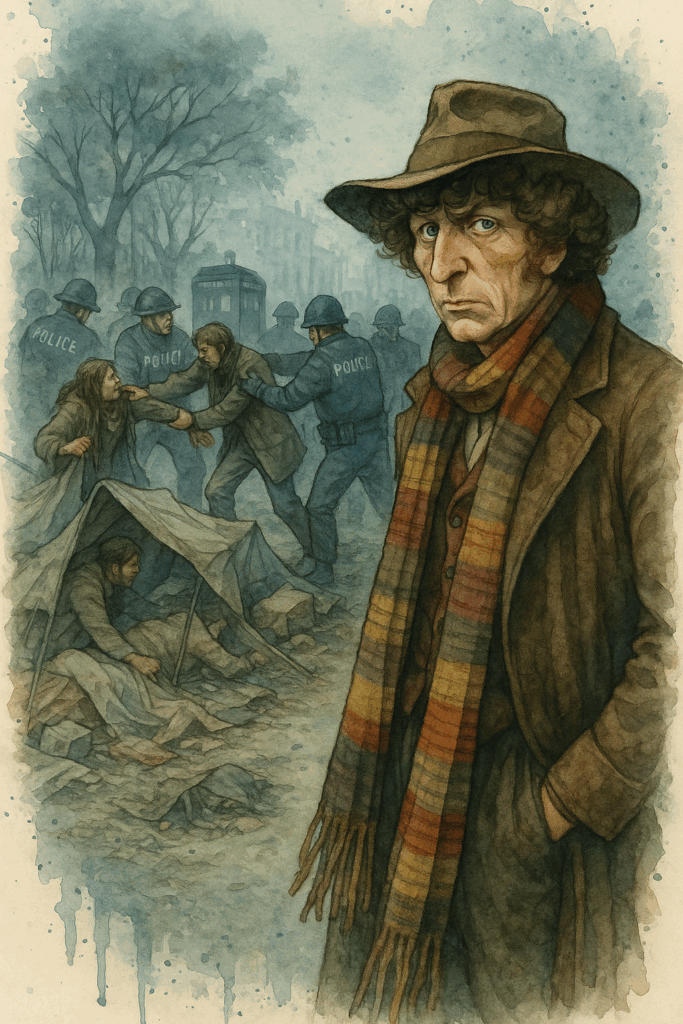
Now, we’ve seen this movie before. Grants Pass, Oregon, learned the hard way that criminalizing homelessness doesn’t “solve” it—it just pushes people around like human Whac-a-Mole. And anyone who’s spent five minutes in the real world knows you can’t force someone into recovery and expect it to work. Even the research says coercion usually backfires (Dr. Jess can back me up here). And surveillance? If people think signing up for housing means winding up in a database, they’ll just stay outside and harder to reach.
These rules don’t reduce homelessness. They fertilize it. They guarantee longer stays on the street, higher recidivism, and deeper distrust of services. They will literally make people disappear—not because they’re housed, but because they’re hiding.
And here’s the kicker: we know how to end homelessness. We’ve known for decades. It’s not complicated: housing plus support. But instead of scaling what works, the people in charge are inventing new ways to supercharge the very problem they’re supposed to solve.
At the end of the day, HUD isn’t changing the rules because they think it’ll work—they’re changing the rules because it looks like action. Clearing camps makes for good TV. Mandating rehab makes for a tidy press release. Partnering with law enforcement reassures the “tough on crime” crowd. It’s politics dressed up as policy, optics over outcomes. And here’s the bitter punchline: it’s easier to manage homelessness badly than to end it well. Housing is expensive, slow, and hard to explain in a thirty-second soundbite. Punishment, on the other hand, is cheap, fast, and cruel—and cruelty has always been easier to sell.
And let’s not kid ourselves, there’s money in it. These policies don’t just punish the poor, they feed the pockets of the top one percent: the developers who build cages instead of homes, the rehab corporations who bill Medicaid for assembly-line treatment, the private security firms who cash checks to clear encampments. Ending homelessness doesn’t generate quarterly profits. Managing it—badly, expensively, and endlessly—does.
Addendum from Dr. Jess, (because Richard asked me to weigh in):
The research is brutally consistent on this: mandatory programs don’t solve problems, they just herd people through hoops. With addiction treatment, for example, studies show coerced rehab rarely produces better long-term outcomes than doing nothing—and sometimes makes things worse, including a higher risk of overdose after release. The same principle applies across the board: you can’t force someone into mental health treatment, job training, or “life skills” workshops and expect lasting change. All you get is box-checking and burnout.
People aren’t broken machines you can fix by bolting on services they didn’t ask for. Recovery, stability, and dignity only stick when they’re chosen, supported, and resourced. Which means HUD’s new “mandatory services for all” rule isn’t just bad policy—it’s a recipe for distrust, wasted money, and recycled suffering.