From Mascot to Manifesto
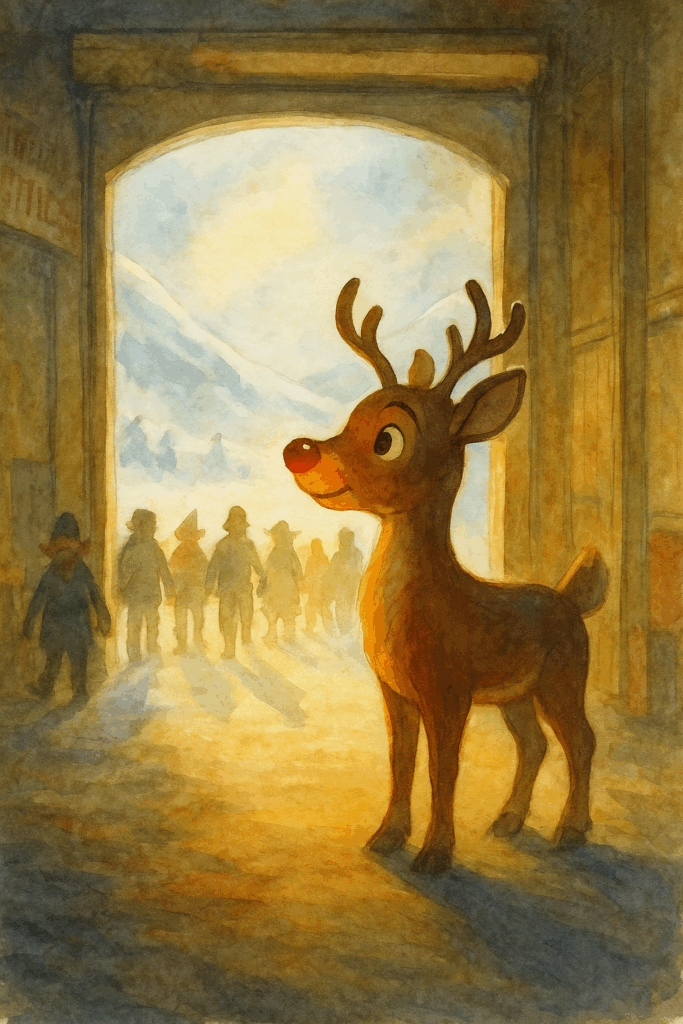
Rudolph the Red-Nosed Reindeer worked for North Pole Logistics, LLC—formerly known as “Santa’s Workshop” before the merger with Amazon.
On paper, it was still whimsical: snowflakes, candy canes, a suspicious number of unpaid interns in elf hats. In practice, it was a 24/7 global fulfillment center powered by cocoa, fear, and a fragile supply chain held together by twine and vibes.
Rudolph’s job title, according to HR, was “Junior Sleigh Propulsion Associate, Seasonal, No Benefits.”
According to literally everyone else, he was “that reindeer with the OSHA violation for a face.”
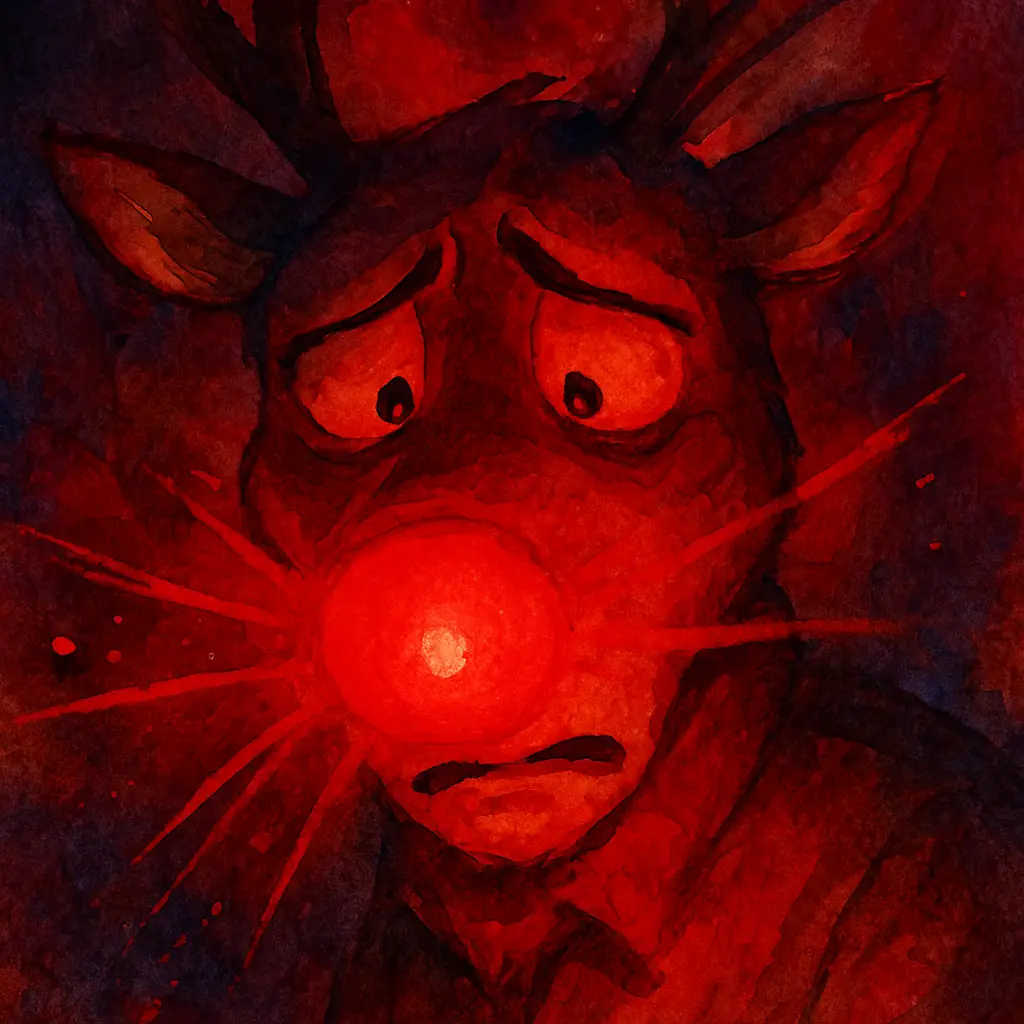
Because Rudolph’s nose glowed.
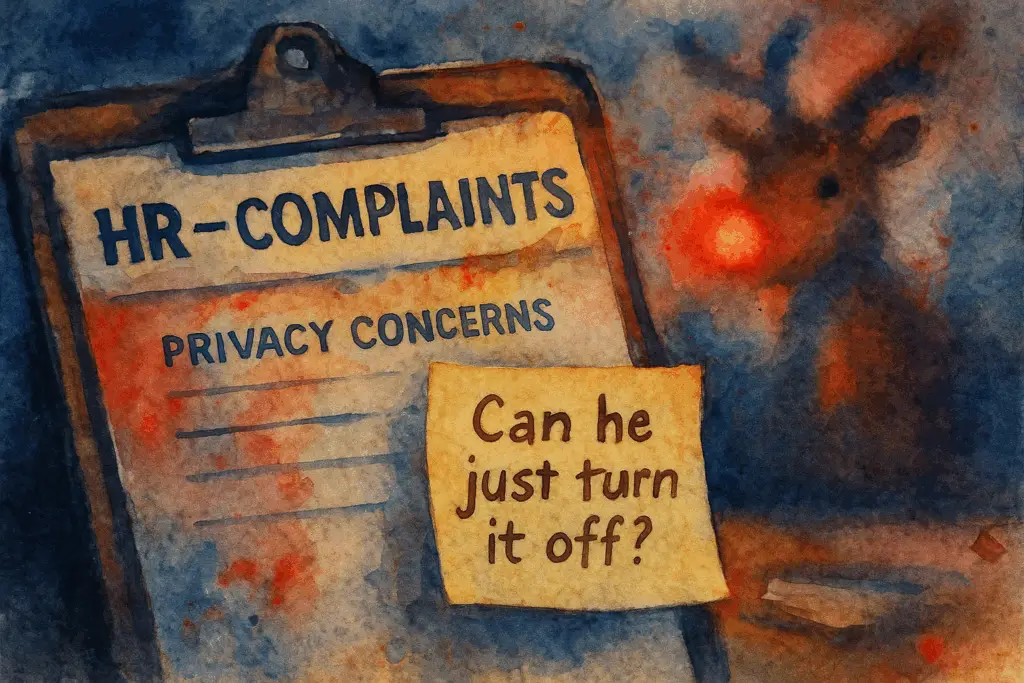
Not just a polite little twinkle. It was a full-on emergency beacon—red, bright, and steadily humming like a tiny nuclear reactor of shame. It lit up the snow. It lit up the conference room. It lit up the bathroom under the stall door, which had resulted in at least three formal complaints labeled “Privacy Concerns” and one anonymous suggestion that he “learn to turn it off like a normal person.”
He could not. That’s the thing about being born different: it doesn’t respond to meeting requests.
Reindeer Games (HR Edition)
The other reindeer didn’t let him join in their games, but not because they were naturally cruel.
They had policy.
Blitzen had forwarded the email from HR:
“Due to Rudolph’s ongoing Optical Anomaly, his participation in high-speed aerial activities constitutes a visual distraction and potential safety hazard for the Sleigh Team. Until appropriate accommodations can be developed, he is restricted from official Reindeer Games, including but not limited to:
– Practice flights
– Formation drills
– Morale-building snowball fights.”
“We’re just following the rules,” Dasher told him, shrugging in that apologetic way that means “I like you, but I like my job more.”
“Yeah,” added Prancer, “we’d totally include you if we could. Have you tried submitting another ADA request?”
“Oh, I did,” Rudolph said. “They sent me a ‘Visibility Dampener’.”
It was basically a corporate-approved paper bag with a small North Pole Logistics logo on the side.
“The lawyer said it counted as a ‘reasonable accommodation,’” Rudolf muttered.
The bag fuzzed around his nose. Light bled through the paper anyway, turning the logo into a neon sign: PROPERTY OF SANTA.
Let’s Make It Go Viral (Again)
Rudolph tried to stay in his lane. He clocked in. He pulled crates. He signed the “Elf Safety Compliance” quiz every quarter. He kept his nose as dim as he could, even though dimming it gave him migraines so bad he could hear snow.
The bullying wasn’t even original. It was just… modern.
The other reindeer had a group chat named “Sleigh Team 🛷✨ (no randos)” that included everyone but him. They posted unflattering photos of Rudolph mid-sneeze with captions like:
“POV: the emergency exit sign grew legs”
and
“Tag ur brightest friend who still doesn’t get promoted 😂”
They filmed him in the break room, nose glowing extra hard because he was anxious, and layered on the audio of someone yelling, “It’s giving nuclear meltdown.”
This would all have stayed petty and localized, except one elf intern—Junie, who was bored, furious at capitalism, and one bad latte away from unionizing the entire toy assembly line—uploaded a clip to ElfTok with the caption:
“When your coworker has a disability and management calls it a ‘branding concern’ instead of making accommodations #NorthPoleProblems #Ableism #LetRudyLead”
The video exploded.
Suddenly, the comments flooded in:
“omg protect him at all costs”
“this is why I stopped believing in Santa tbh”
“he deserves a promotion and a weighted blanket”
Overnight, #LetRudyLead trended.
By morning, North Pole Logistics’ PR inbox looked like the aftermath of a Black Friday stampede.
Santa, Inc.
Santa did not read his own email. Santa had elves for that.
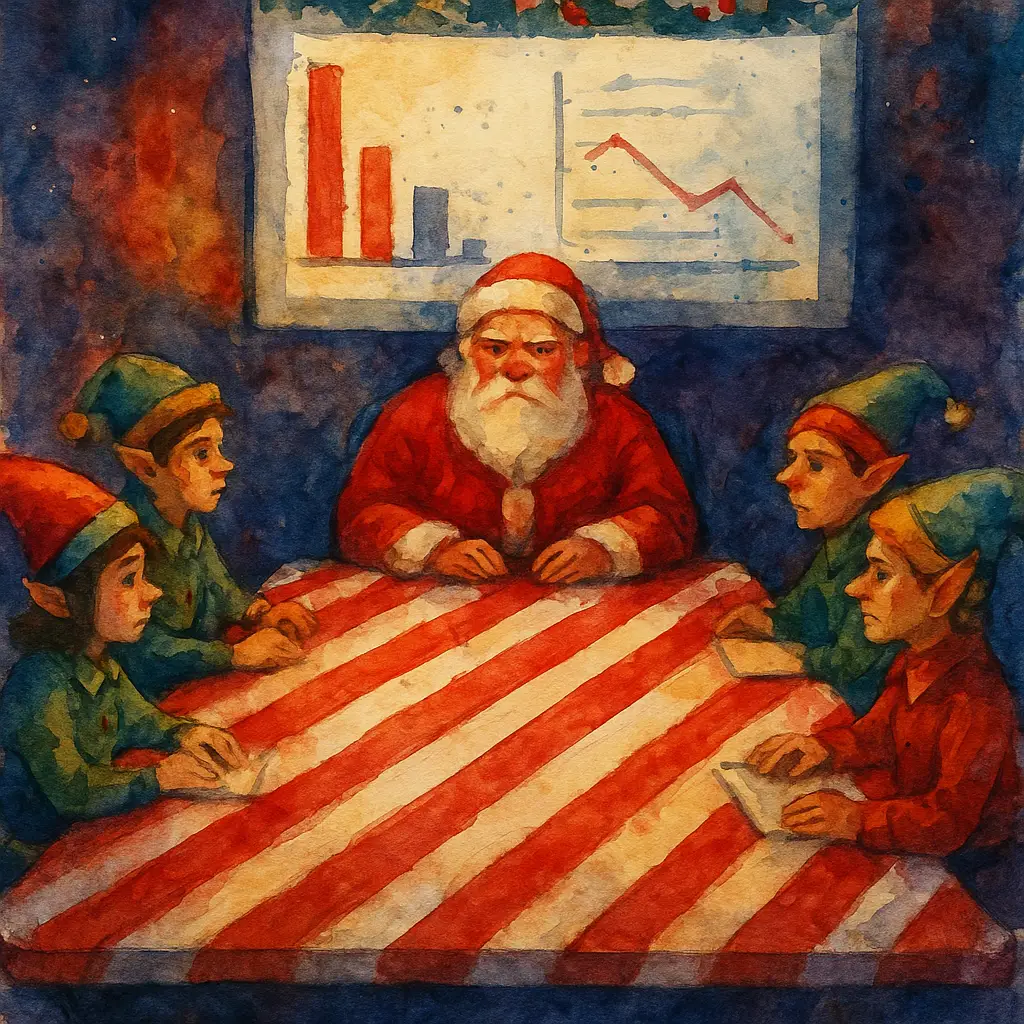
He sat at the head of a long candy-cane-striped conference table while the Crisis Management Elves projected charts onto a marshmallow-white screen.
“Brand sentiment is down 12% among Gen Z and up 300% among… anarchists on TikTok,” one elf read nervously.
“Is that bad?” Santa asked, sipping his coffee, which was technically hot fudge.
“Yes,” the elf said. “They’re making memes. About you.”
Santa frowned. “I kept Christmas cheap and nostalgic. I didn’t raise the rent. I didn’t invent student loans.”
“Sir,” the head of PR said gently, “modern audiences don’t care about nuance. They care about vibes.”
The HR elf raised a trembling hand. “We might, uh, also be in violation of several workplace safety and disability accommodation standards.”
Santa squinted. “I thought we were classified as a magical nonprofit.”
“Global supply chain laws still apply.”
Silence.
Finally, Santa sighed the sigh of a man who had survived centuries of plagues, wars, and toy recall notices but might finally be undone by a website with dancing reindeer GIFs.
“Fine,” he said. “Schedule a Listening Session. We’ll do restorative justice. We’ll do… diversity stuff.”
One elf nodded furiously, typing “diversity stuff” into the official Santa Action Plan doc.
“And get me the glowing one,” Santa added. “What’s his name? Ruby?”
“Rudolph, sir.”
“Right. Him. Bring him in. He’s trending.”
The Diversity Hire
They did not say “diversity hire,” of course.
They called it “elevating marginalized voices.”
They called it “celebrating unique gifts.”
They called it “Rudolph, meet your new role: Chief Illumination Officer.”
They designed a badge with his face on it and printed posters:
GLOW WITH US.
At North Pole Logistics, we don’t just tolerate differences—we monetize them.
Rudolph sat in the conference room, staring at a mockup of his own cartoon face, nose glowing like a warning siren.
“So,” he said slowly, “am I actually going to be leading the sleigh team this year? Or is this just for the holiday newsletter?”
“Oh, you’ll be in front,” Santa promised, clapping him on the back. “Very inspirational imagery. We’ll do a whole campaign. What’s that thing they like? A documentary?”
“A docu-series,” corrected the PR elf.
“Yes, that. ‘Rudolph: From Misfit to Marketable.’”
Rudolph winced. “I didn’t ask to be your redemption arc.”
Santa’s smile wavered. “Well, kid, nobody asks to be a symbol.”
In the corner, Junie the intern watched, arms crossed, filing that sentence away under “evidence” and “future TikTok sound.”
The Night It All Went Dark
On December 24th, at 11:58 PM, the sky over the North Pole dropped like a curtain.
It wasn’t a cute snowfall. It was climate change having a breakdown: blizzard, ice storm, fog thick enough that the elves at the loading dock couldn’t see their own hurt feelings.
The satellite navigation went out first, then the backup radar, then the experimental “trusted third-party delivery partner” arrangement with UPS crumpled.
The North Pole power grid flickered, sighed, and died.
The Workshop plunged into black and red: the exit signs and Rudolph’s nose.
In the dark, someone whispered, “Oh.”
Santa’s smartwatch started screaming emergency alerts. The dashboard in the sleigh blinked “NO SIGNAL.” Global children’s expectations loomed like an unpaid invoice.
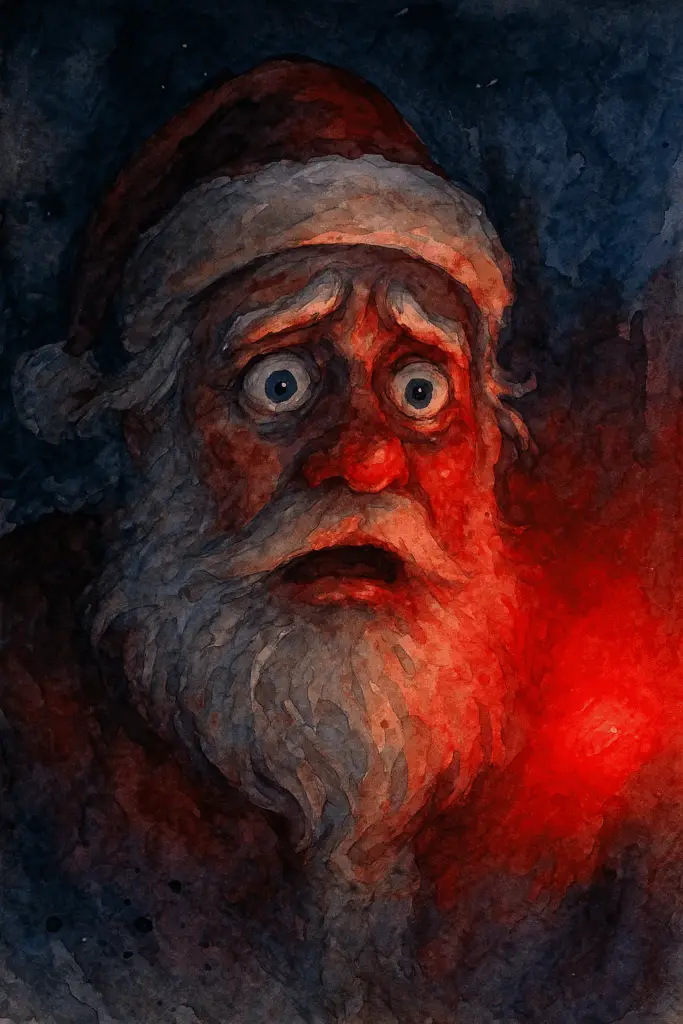
For the first time in centuries, Santa looked truly panicked.
“We can’t delay,” he muttered, pacing. “If the kids wake up, the magic breaks. That’s… that’s in the terms of service.”
“Sir,” said one of the logistics elves, “we can’t see. The reindeer can’t fly blind. The risk assessment—”
And then everyone turned to face the one steady light in the room.
Rudolph swallowed. His nose buzzed louder, responding to the storm flickering outside.
Santa cleared his throat. “Well, kid,” he said, “this seems like… your moment.”
The room was quiet. No one made a joke. Even the reindeer who had never let him join their games now looked at him like he was the last flashlight in a flood.
Rudolph could feel the weight of it: centuries of tradition, millions of wish lists, an entire myth balancing on his sinuses.
And under that, the cold truth: They didn’t see him when he was suffering. They only saw him now that he was useful.
The Thing About Light
He thought about saying no.
He thought about walking out the door, nose blazing across the empty snow, leaving them scrambling to explain to the children why magic failed the year they refused to care for the people making it.
But he also thought about those kids.
The ones who had taped his viral clip to their bedroom walls. The ones who had whispered to their glowing night-lights, “You’re like Rudolph. You’re like me.” The autistic kid who flapped happily in the comments about having a “too bright brain.” The chronically ill teen who wrote, “If he can glow in public, maybe I can exist in public too.”
He didn’t want them to wake up to proof that the world always chooses profit over care.
He wanted, selfishly and tenderly, for them to have one night where the miracle won.
Rudolph took a breath. The air tasted like snow and burnt wiring.
“I’ll do it,” he said. “But not for free.”
Santa blinked. “Son, this is Christmas.”
“Exactly,” Rudolph said. “Let’s negotiate.”
Terms and Conditions (Updated)
They huddled around a hastily pulled-up contract on an elf’s tablet, its battery clinging to 3%.
Rudolph’s demands were simple:
- Full-time employment with benefits for all reindeer, no more “seasonal associate” nonsense.
- Medical and mental health care that didn’t require twelve forms and a miracle.
- A Reindeer Union, with Junie as their first outside organizer. (She nearly fainted from joy.)
- An official Grievance Process that went somewhere other than “archive.”
- A commitment that “diversity” wouldn’t just mean plastering his glowing nose on mugs while everyone else stayed unpaid and unseen.
“And,” Rudolph added, nose now shining hard enough to leave after-images, “you apologize. In public. Not because you got caught. Because you were wrong.”
Santa stared at him in the red glow, the storm beating against the windows like a deadline.
“This will cost us,” Santa said quietly.
“It’s already costing us,” Rudolph replied. “You just haven’t been the one paying.”
That was the oh-damn moment: the truth hanging in the air like breath in cold, visible and undeniable.
Santa closed his eyes.
For a second, he wasn’t a brand. He was just an old man who had been told for centuries that “tradition” mattered more than the people who upheld it.
When he opened them, they were wet.
“Alright, Rudolph,” he said. “You drive a hard bargain.”
Junie leaned forward. “I can get this signed digitally if we hurry. I’ve got DocuSign and one bar of service if I stand on the roof.”
“Do it,” Santa said.
He signed.
The pen shook, just a little.
And Then They Flew
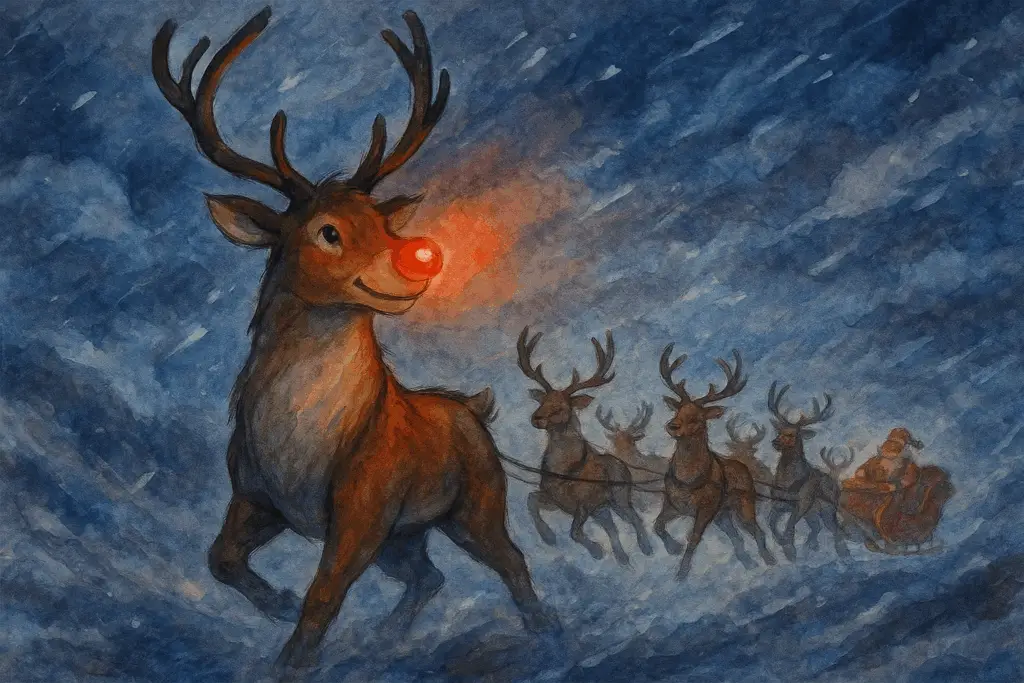
They hit the sky like a thrown wish.
The storm was vicious, but Rudolph’s nose cut through the dark in a fierce red beam. For the first time, he led the sleigh not as the problem they had to manage, but as the one they allowed to exist on his own terms.
The other reindeer flew behind him, hooves pounding clouds, formation tight.
“Hey, Rudy,” Dasher called through the wind. “For the record… we were jerks.”
“Yeah,” Prancer added. “You didn’t deserve that.”
Rudolph didn’t turn around. His eyes were on the future, on the lights of cities below, on the lives he’d never see but was quietly stitching magic into.
“It wasn’t just you,” he said. “But I’ll take the apology.”
Down below, kids slept on couches and floors and in beds shared with siblings, dreaming of improbable joy. Somewhere, an exhausted nurse in scrubs had left cookies on the counter for herself with a note that said, “From Santa, to Me, Because Honestly, I Earned It.”
Rudolph guided them all through the storm.
He was tired. His nose hurt. His back stung from years of comments and jokes and the weight of always being “inspirational” when all he wanted was to be left alone in peace sometimes.
But up there, in the dark, he was not broken.
He was bright.
Epilogue: After the Hashtag
In January, when the snow turned gray and the magic fog of the holidays dissolved into regular misery, the real work began.
There were union meetings and tense negotiations and one spectacular meltdown where Blitzen stormed out yelling about pension plans. There were new ramps installed. There was a new “Neurodivergent and Disabled Reindeer Resource Group,” which Rudolph hated the name of but loved the coffee and company.
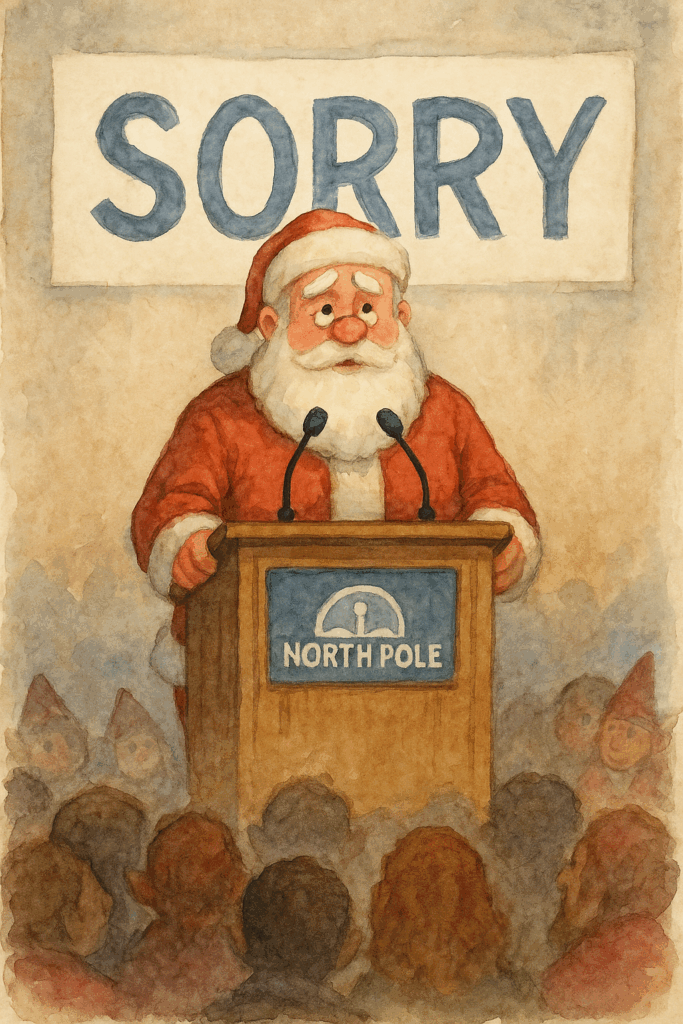
Santa held a press conference, hands shaking as he read from prepared notes.
“We failed Rudolph,” he said, voice echoing across screens. “We failed many of our workers. We treated difference as a liability until it became a marketing opportunity, and that is not what Christmas is supposed to be about.”
Junie clipped that soundbite, of course. It became an ElfTok audio trend where people posted pictures of themselves before and after leaving toxic jobs.
Rudolph watched it all, nose on low.
Sometimes he still felt like an object: a glowing mascot, a story people told to feel better about systems that still crushed plenty of others.
But then he’d walk into the break room and see a new reindeer with a crooked leg, laughing with Junie about organizing. Or an elf wearing noise-canceling earmuffs without shame. Or a poster someone had taped over the old “Productivity is Magic!” sign.
It was handwritten, a little crooked, and it said:
“If your light only matters when they can use it, that’s not magic. That’s extraction.”
Rudolph snorted. Dark, a little mean, completely correct.
He turned his nose up—not in pride, but in refusal—and let it glow brighter.
Outside, the world was still a mess. Housing was still impossible. Healthcare was still a labyrinth. Capitalism still had its boot gently but firmly on everyone’s throat.
But in one freezing, sprawling warehouse at the top of the world, the workers had a union, the boss had learned how to say “I’m sorry” into a microphone, and the weird kid with the wrong kind of brightness had led them, not just through one night of fog, but into the uncomfortable, necessary daylight.
And all the reindeer learned, very slowly and with many committee meetings, that the point was never that Rudolph’s nose was special.
The point was that no one deserved to be left in the dark.