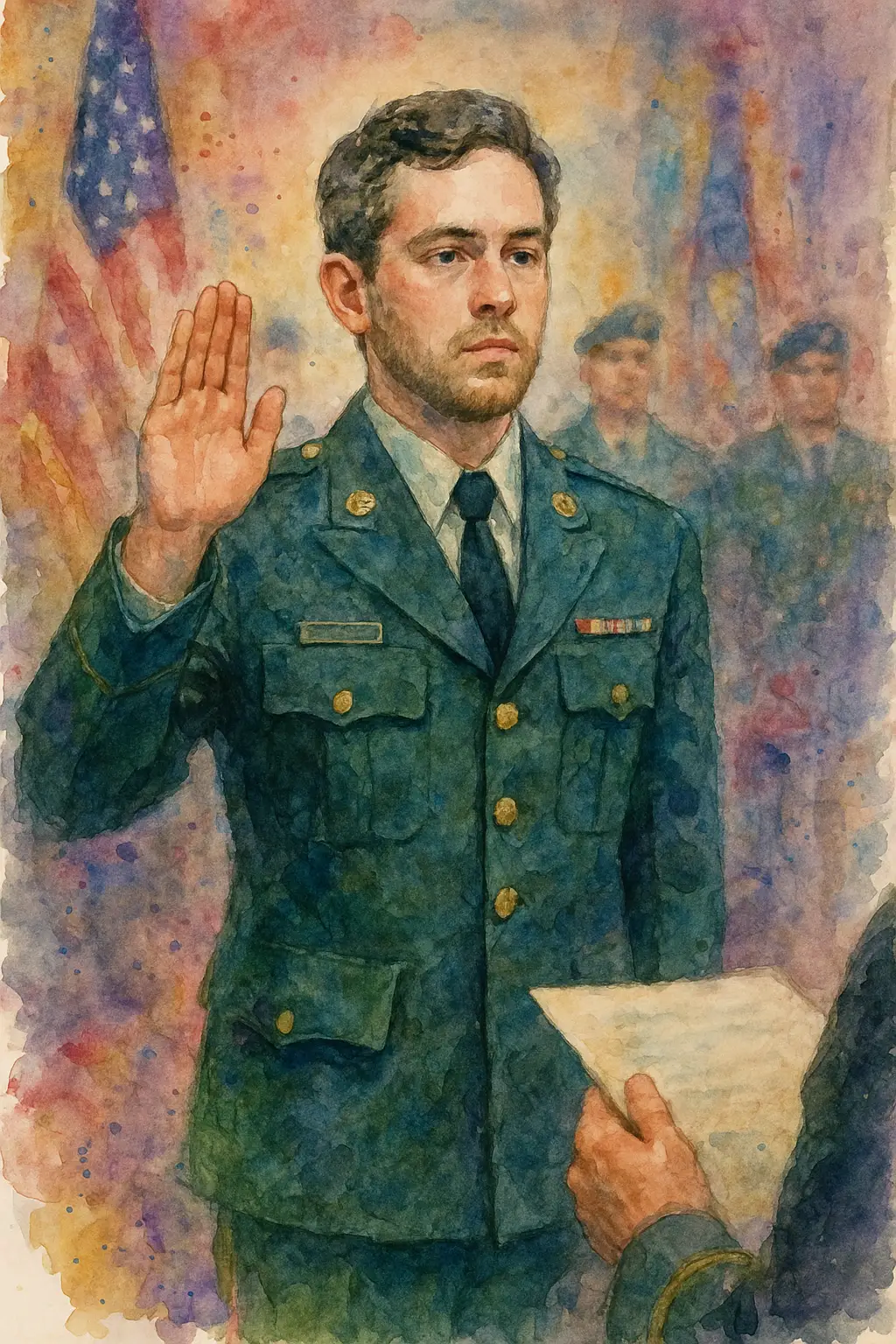
I raised my right hand. The words came easy. You practice them. You hear them in movies. They’re meant to sound bigger than you—that’s the point.
“I do solemnly swear that I will support and defend the Constitution of the United States against all enemies, foreign and domestic…”
That’s the first promise, and the most important. The rest follows: obey the orders of the President and the officers appointed over me. But the order of those clauses matters. Defend the Constitution first. Obey orders second. The structure itself teaches where the line is.
When I was in uniform, that line felt mostly theoretical. Thirty years ago the Constitution didn’t seem under real threat—abroad or at home. The Cold War was over. Coups and collapse felt like someone else’s problem. Our enemies were external; our confidence, internal. The system felt permanent. The oath felt like ceremony.
Permanence, it turns out, was a comfort story. Recent years made it plain: the danger doesn’t always march under another flag; sometimes it waves the same one for the wrong reasons.
I trained to fight over geography. The fight that matters is about integrity. The enemies of the Constitution aren’t coordinates; they’re habits of mind—cynicism, apathy, greed in patriotic costume.
That’s the paradox the oath asks you to live with: allegiance to both Order and Conscience, knowing one will test the other. The soldier learns to follow commands; the citizen remembers obedience isn’t the highest virtue. Service, at its core, is standing in that tension without losing your humanity.
And then there’s failure—the quiet specter behind it all. In training we said, “Failure is not an option.” In philosophy we admit, “Failure is mandatory.” Both can be true, depending on the mission. You can’t afford to fail when lives or liberty are on the line. But no plan survives contact with the enemy. Every operation—and every ideal—meets reality eventually, and reality fights back. The test isn’t whether we fail, but how quickly we learn and adapt before the cost becomes unbearable.
I only wish the lessons came cheaper. You’d think the rise and ruin of other republics would be warning enough. Yet here we are, tracing the same fault lines, daring gravity to prove it’s real.
The oath never expires. The uniform comes off, but the promise keeps working in the background—a compass that doesn’t care how tired you are. It points to something older than rank or politics: the idea that freedom depends on people willing to keep thinking when it would be easier not to.
That’s the work now. Not the loud kind, not the heroic kind—just the steady defense of principle in a world that mistakes chaos for liberty and silence for peace.
We still serve, each in our way. The first oath comes first. It’s still waiting to be kept.