(aka Why Watching Glenn Die Again Feels Healthier Than Reading the News)
Let’s be honest: 2025 feels like a game of apocalypse bingo where every square is already crossed off. Climate collapse? Check. Democracy circling the drain? Check. A presidential rematch that literally no one except a handful of billionaires and lobbyists wants? Double check. Oh, and institutions collapsing like a badly built Jenga tower at a frat party? Of course.
It’s not just the disasters. It’s the vibe. Every system seems to be failing in slow motion — like a car crash scored by elevator music.
So, in the spirit of radical self-preservation, I started rewatching The Walking Dead. Yes, the whole thing. Including all the spin-offs. Why? Because somehow, watching a fictional apocalypse feels easier than scrolling through the real one. At least zombie attacks are straightforward — unlike reading another Supreme Court ruling.
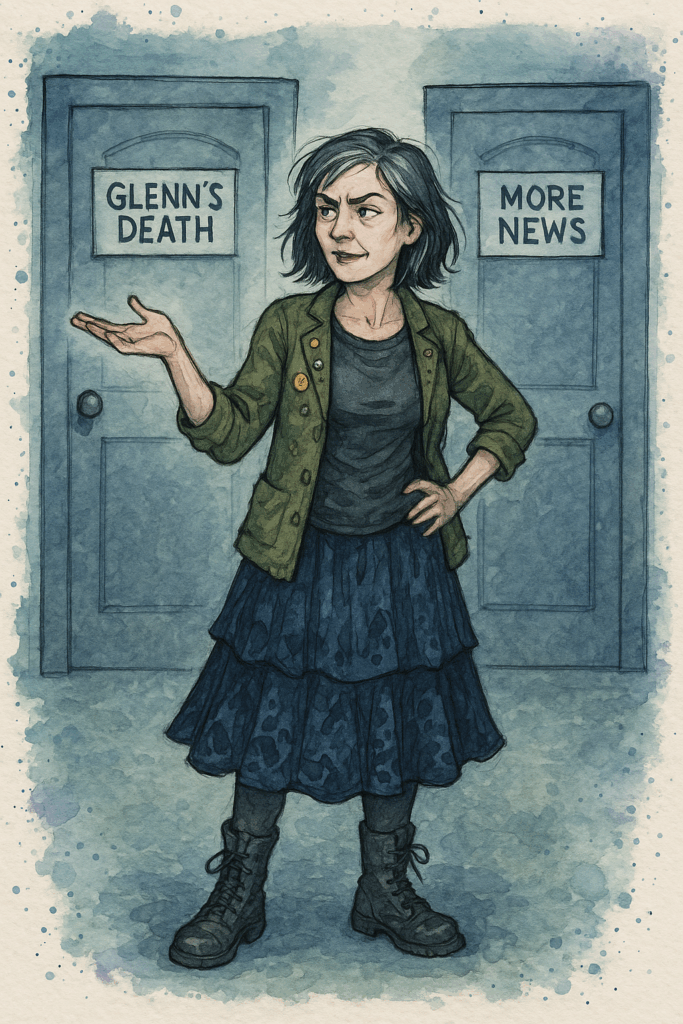
Honestly? I’d rather watch Glenn die again than open another news tab.
🧨 Rick Grimes and the Gospel of Controlled Burning
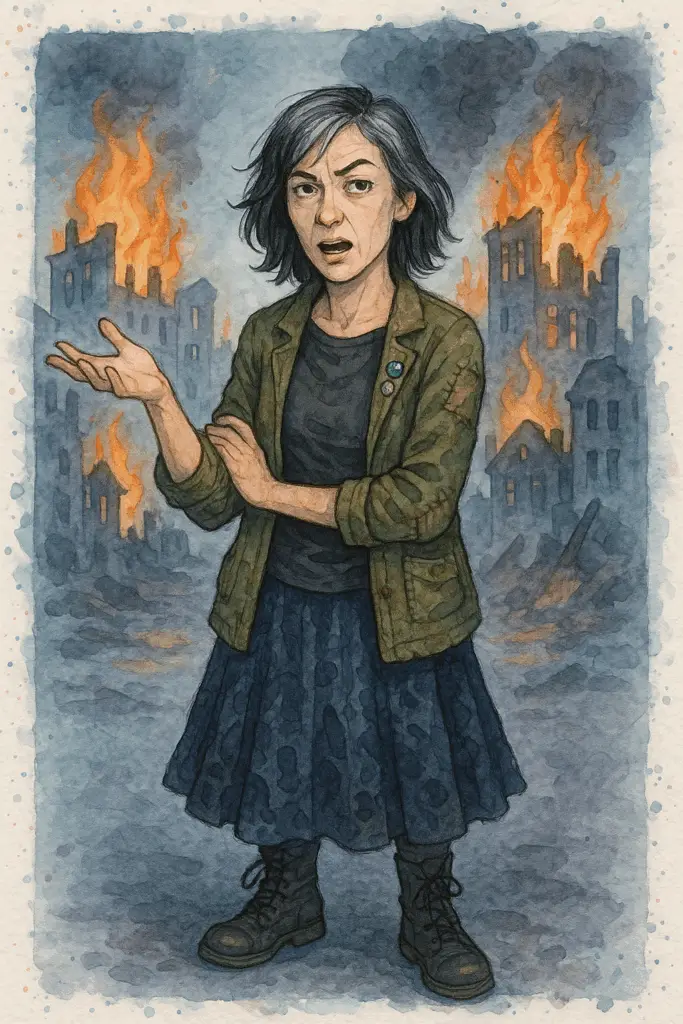
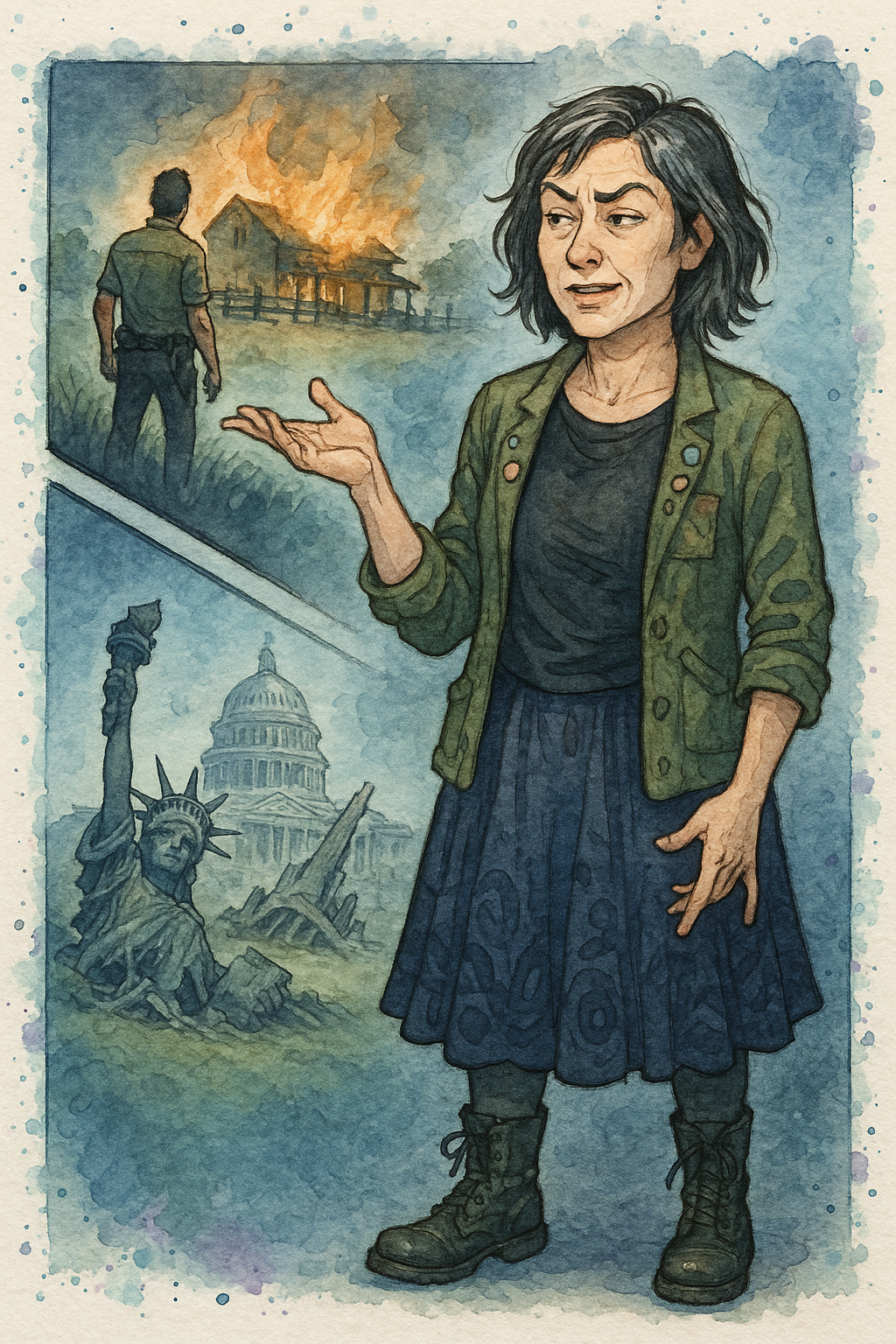
There’s this line that won’t leave me alone. Rick remembers his father burning their farm fields in 1980:
“He said I didn’t need to be scared, that it was just the burning, that the flames were protecting the plants for the next harvest. He said, ‘It may look like the end of the world, but it’s only just the beginning.’”
Not exactly a Hallmark moment. But it’s a perfect metaphor: collapse that doesn’t have to be final. Sometimes the fire isn’t a mistake — it’s the only damn chance for regrowth.
📉 Newsflash: America Is Stress-Eating Itself Into the Ground
Right now, the U.S. looks like Rick’s burning field, except instead of crops we’re roasting:
- 49% of Americans say they’re stressed out all the time.
- 77% report the future of the nation is a major source of stress.
- Americans eat alone more than anyone else in the developed world. (No, doomscrolling doesn’t count as dinner conversation.)
- We’re sitting pretty at 24th in global life satisfaction, our worst ranking yet.
(Sources: APA, World Happiness Report — aka bedtime stories from hell.)
This isn’t just exaggeration. It’s a bonfire. But fire ≠ finality.
✊ 1963 Looked Like The End Too
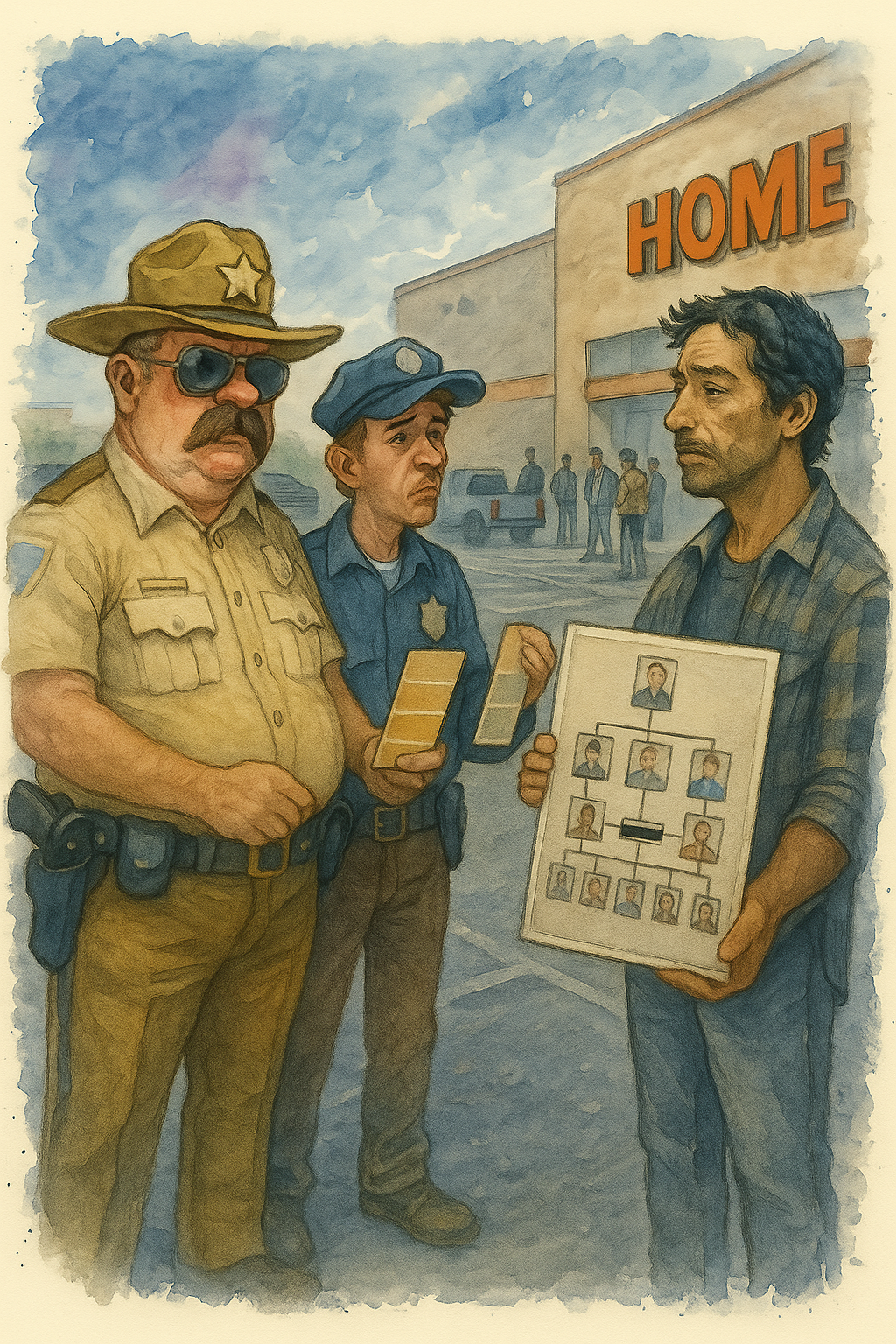
Flashback to Birmingham, Alabama. Children jailed for marching. Families bombed. Fire hoses and police dogs unleashed on teenagers. Civil rights leaders wondering if America would ever wake the hell up.
And then… it did. Sort of. The violence was televised, suburban silence cracked, and Kennedy finally admitted civil rights was “a moral issue.” By 1964, the Civil Rights Act passed.
It wasn’t inevitable. It wasn’t clean. It sure as hell wasn’t “worth it.” But it was proof: sometimes the fire exposes rot so undeniable the nation can’t keep pretending it’s fine.
🔥 What Survives the Fire?
Rick’s story isn’t about comfort. It’s about survival. About how destruction is terrifying and fertile.
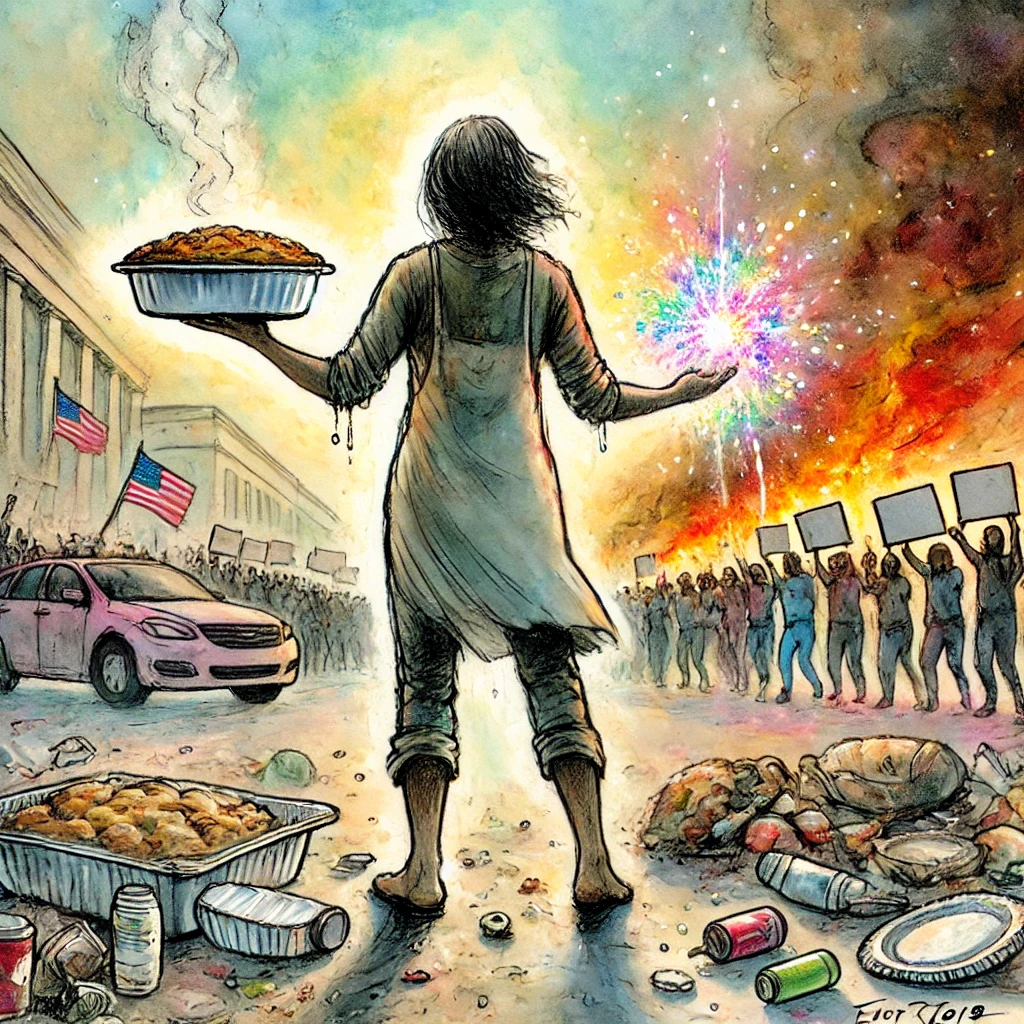
And right now? Even while systems crumble, the roots are alive:
- Acts of kindness are still 10% higher than pre-pandemic.
- Helping strangers is up 18% from 2019.
- People return lost wallets twice as often as anyone expects.
It doesn’t erase collapse. But it does mean the ground isn’t dead.
📺 Why I’d Rather Watch Zombies Than CNN
Because apocalypse stories — like history — aren’t about neat resolutions. They’re about what remains.
Rick’s father didn’t set those fields on fire for fun. It was desperate, ugly, and dangerous. But it was survival. The only thing left to try when nothing else worked.
That’s where we are now. Nothing feels like it’s working. And yet—people are still resisting. Communities still spark into being. Strangers still return wallets.
“It may look like the end of the world, but it’s only just the beginning.”
Not a promise. Just a possibility. That’s enough.